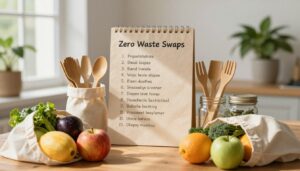

Many people think eco-friendly living costs a lot. They believe green choices are too pricey for their homes. But, the long-term benefits show this isn’t true.
According to the EPA’s waste and recycling data, small everyday changes at home add up to significant environmental impact over time.
Switching to reusable products that save money is a smart move. It cuts down your monthly bills and helps the planet. By choosing durable over disposable, you save money and reduce waste.
Making the switch is simpler than you might think. We’ll guide you on how to make your life greener without spending more. By adopting these simple habits, you can save money and help the environment at the same time.
Key Takeaways
- Sustainable living often lowers your monthly household expenses.
- Durable goods pay for themselves quickly compared to disposable items.
- Small daily changes lead to significant long-term financial gains.
- Eco-friendly choices reduce waste and clutter in your home.
- You can protect the environment while keeping your budget intact.
Assessing Your Current Spending Habits
Changing your lifestyle starts with looking at what you throw away after one use. By tracking your spending, you can see how much money you lose to convenience. Buying budget-friendly reusable goods helps you save money and stop wasting it.
Identifying Single-Use Expenses
Begin by checking your trash and receipts. You might spend a lot on things like paper towels and plastic bags. For example, Americans use nearly 1,500 plastic bags a year, wasting a lot of money.
These small purchases add up and drain your budget. By spotting these patterns, you can make smarter choices. Using frugal reusable products helps you avoid the “buy-and-toss” cycle and save money.
Calculating Your Annual Savings
Tracking these costs shows how much you can save. Many families spend hundreds on items used for just minutes. Choosing durable items means you only pay once, not every time you use it.
The table below shows how these costs add up. It proves why budget-friendly reusable goods are a smart choice for your wallet.
| Item Category | Annual Single-Use Cost | Reusable Alternative Cost | Estimated Yearly Savings |
|---|---|---|---|
| Paper Towels | $150 | $30 | $120 |
| Plastic Bags | $60 | $15 | $45 |
| Disposable Razors | $120 | $40 | $80 |
| Food Storage | $80 | $25 | $55 |
Seeing these savings can motivate you to make changes. Your initial investment will pay off in a few months. Taking control of your spending is the first step to better finances.
Kitchen Essentials for Long-Term Savings
Turning your kitchen into a green space is a smart money move. By checking your daily habits, you’ll see many disposable items cost too much. Switching to eco-friendly reusable items helps you avoid buying things that get thrown away fast.
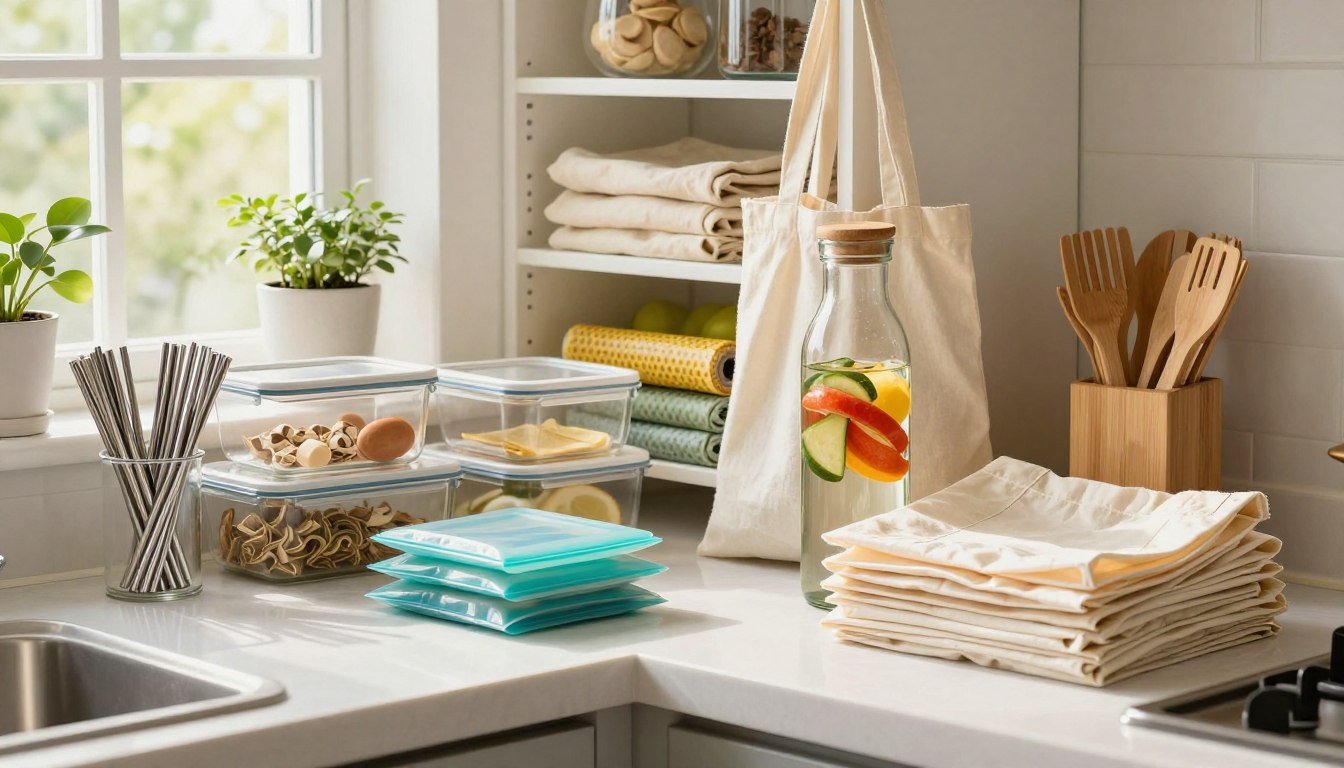
Switching to Silicone Food Storage Bags
Plastic sandwich bags can add up in cost over time. Silicone bags are a better choice because they last a long time and can be washed many times. They’re great for snacks, meat, or keeping veggies fresh.
Think about using reusable beeswax wraps for cheese or veggies. These wraps are very versatile and keep food fresh for a long time, without plastic wrap.
Investing in Glass Meal Prep Containers
Plastic containers often warp or stain quickly. Glass containers are a smarter long-term choice for your kitchen. Glass is safe for your food and can handle dishwasher and microwave heat.
These containers last for years, making meal prep easier and keeping leftovers healthy.
Replacing Paper Towels with Swedish Dishcloths
Paper towels lead to a lot of waste and need constant buying. Swedish dishcloths are a highly absorbent and washable option. Just wash them when they get dirty and use them again.
These small changes make your kitchen more efficient. Cost-effective reusable solutions will save you money in a few months, freeing up funds for other goals.
Sustainable Grocery Shopping Strategies
Transforming your weekly grocery run can save money and reduce waste. Choose eco-friendly reusable items to spend less on disposable goods. This change helps your finances and the environment.
Utilizing Mesh Produce Bags
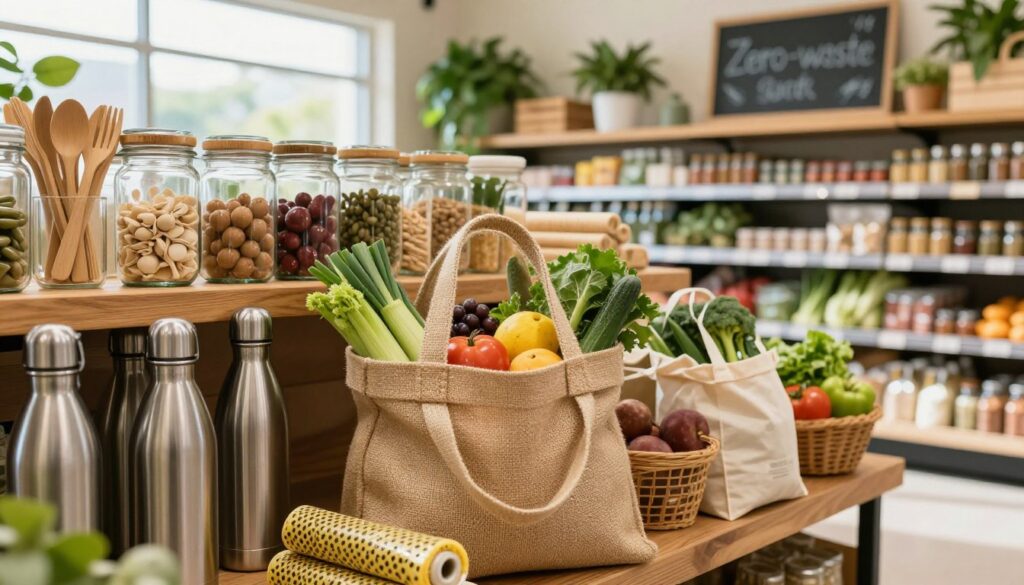
Most shoppers use thin plastic bags in the produce section. These bags are hard to open and often become litter. Switch to washable mesh bags to keep your produce organized without waste.
These bags are light and incredibly durable. They last for years. Just wash them in the laundry to keep them clean.
Choosing Durable Canvas Totes
Many stores charge extra for bags at checkout. Bring your own canvas totes to avoid these fees. This is a great way to use reusable household items on a budget.
Canvas bags can hold more than plastic bags. You’ll need fewer trips to the car, making shopping more efficient.
Opting for Bulk Bin Containers
Buying from bulk bins helps you avoid waste and save money. Use your own glass jars or cloth bags to save on grains, nuts, and spices.
| Item Type | Single-Use Cost | Reusable Cost | Long-Term Savings |
|---|---|---|---|
| Produce Bags | $0.00 (Free/Waste) | $10.00 (Set) | High |
| Shopping Totes | $0.10 – $0.25/bag | $2.00 – $5.00/each | Very High |
| Bulk Containers | Included in price | $5.00 – $10.00 | Moderate |
Investing in these tools is a smart financial move. It quickly pays for itself. By making these swaps, you create a sustainable kitchen that benefits your wallet and the planet.
Personal Care and Bathroom Swaps
Making small changes in your daily routine can save you a lot of money over time. By choosing sustainable living products, you can make your hygiene routine more affordable.
Transitioning to Safety Razors
The bathroom is a great place to start using frugal reusable products. Switching to a stainless steel safety razor is a smart choice. It saves you money by not needing expensive, disposable plastic cartridges.
At first, a good handle might cost more. But the blades are very cheap. This change drastically reduces your monthly expenses and gives you a better shave.
Switching to Reusable Makeup Remover Pads
Disposable cotton rounds can add up in cost over the year. Switching to washable makeup remover pads saves you money. You won’t throw money away every night.
These pads are made to last. Just wash them with your towels. They’re a cheap and easy alternative to single-use items.
Adopting Menstrual Cups or Period Underwear
Your personal care choices can really affect your wallet. Using menstrual cups or period underwear can save you thousands over your lifetime.
These choices also help the environment by reducing plastic waste. They’re durable alternatives that keep your routine green and efficient for years.
Cleaning Supplies That Pay for Themselves
Don’t waste your money on disposable cleaning supplies. Choose money-saving reusable alternatives to keep your home clean and your wallet full. These changes cut down on waste and save you from frequent shopping trips.
Refillable Glass Spray Bottles
Most cleaners are water in expensive plastic. Switch to refillable glass bottles. Mix your own solutions with vinegar, water, and essential oils.
This is a smart way to save money. Buying ingredients in bulk saves you a lot over time. You won’t need to buy new plastic bottles every month.
Microfiber Cloths Versus Disposable Wipes
Disposable wipes are easy but expensive. Microfiber cloths are better because they catch dust and dirt well. They’re also washable, so you can use them many times.
Using these cloths saves money and reduces waste. They’re a great choice for your wallet and the environment.
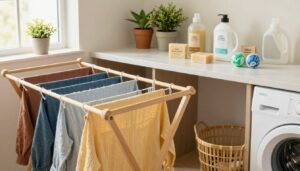
Wool Dryer Balls for Laundry Efficiency
Laundry can be a big energy user. Wool dryer balls are a smart choice. They reduce drying time by at least 30%, saving you money on electricity.
True sustainability is found in everyday items. Choosing durable tools simplifies life and protects resources.
The table below shows how these money-saving reusable alternatives compare to disposable items over a year.
| Item | Disposable Cost (Annual) | Reusable Cost (Annual) | Savings |
|---|---|---|---|
| Cleaning Sprays | $60 | $10 | $50 |
| Cleaning Cloths | $45 | $15 | $30 |
| Dryer Sheets/Balls | $30 | $5 | $25 |
| Total | $135 | $30 | $105 |
Buying reusable household items on a budget is wise. You’ll see lower bills and savings right away.
The Financial Impact of Reusable Products That Save Money
Looking at your household purchases over time can change how you budget. Many think sustainable living costs more, but it’s actually a strategic financial investment. By changing your view, you’ll see how reusable products that save money pay off many times.
Understanding the Initial Investment vs. Long-Term Value
Quality, durable goods often cost more upfront. But they save you money in the long run by cutting down on small, frequent purchases. You’re making a smart trade, swapping recurring expenses for a single payment.
Choosing cost-effective reusable solutions means you’re not wasting money on disposables. Think of your home as a business where you’re reducing costs. The savings add up, improving your financial health over time.
Tracking Your Return on Investment
Track your spending for a few months to see the value. Items like silicone bags or glass containers often pay for themselves in a year. This tangible return on investment shows your progress clearly.
Keep a log or use a budgeting app to track your savings. Seeing the numbers helps justify the initial cost of quality items. These cost-effective reusable solutions are good for the planet and your wallet.
Maintaining Your Reusable Goods for Longevity
Keeping your gear in top shape ensures you get the most value from your money-saving reusable alternatives. When you treat your items with care, you avoid the need for frequent replacements. This simple approach helps you protect your initial investment while keeping your home running efficiently.
Proper Cleaning Techniques for Silicone and Fabric
Cleaning your items correctly is essential for their durability. For silicone bags and containers, use warm soapy water and a soft sponge to avoid scratches. Always check the manufacturer’s guidelines to see if your items are dishwasher safe, as high heat can sometimes degrade the material over time.
Fabric items, such as beeswax wraps, require a more gentle touch. You should leave these wraps at room temperature for a few minutes before cleaning to make them easier to fold and wash. This prevents the wax coating from cracking or wearing down prematurely, which keeps your affordable eco-friendly choices functional for much longer.
Storage Tips to Prevent Wear and Tear
Proper storage is just as important as cleaning when it comes to preserving your goods. Keep your silicone bags in a cool, dry place away from direct sunlight to prevent the material from becoming sticky or discolored. You should also avoid folding them in ways that create permanent creases, as this can lead to small tears.
Organizing your kitchen tools effectively will help you maintain your affordable eco-friendly choices without extra effort. Use dedicated bins or hooks to keep items separated and accessible. By following these habits, you ensure your sustainable toolkit remains in peak condition for years to come.
| Item Type | Cleaning Method | Storage Tip |
|---|---|---|
| Silicone Bags | Warm soapy water | Store flat or rolled |
| Beeswax Wraps | Cool water, mild soap | Keep away from heat |
| Glass Containers | Dishwasher safe | Stack with liners |
| Fabric Totes | Machine wash cold | Hang to dry |
Overcoming Common Challenges in Sustainable Living
Starting to use sustainable living products can be tough. It’s normal to feel overwhelmed at first. But remember, you don’t have to be perfect to help the planet.
Managing the Learning Curve of New Habits
Getting used to carrying reusable items can be hard at first. You might forget your gear or leave it at home. Consistency is the key to making these habits stick.
Start by making affordable eco-friendly choices that fit your life now. Don’t worry if you forget your reusable cup. Just try again tomorrow. Progress is what matters most.
Handling Social Situations and Convenience
Going out with friends or shopping can test your new habits. You might feel shy about using your own containers. But, doing so helps a lot.
“We don’t need a handful of people doing zero waste perfectly. We need millions of people doing it imperfectly.”
Being prepared helps you stick to sustainable living products when you’re out. Keep a small kit with a tote and travel utensils. This way, you can stay true to your values without hassle.
- Keep a “go-bag” ready by your front door.
- Communicate your preferences politely when ordering food.
- Celebrate small wins to stay motivated on your journey.
Building Your Sustainable Toolkit Gradually
Starting your journey to eco-friendly living is best done step by step. Instead of changing everything at once, focus on replacing one or two items each month. This slow approach helps you smoothly add budget-friendly reusable goods to your daily life.
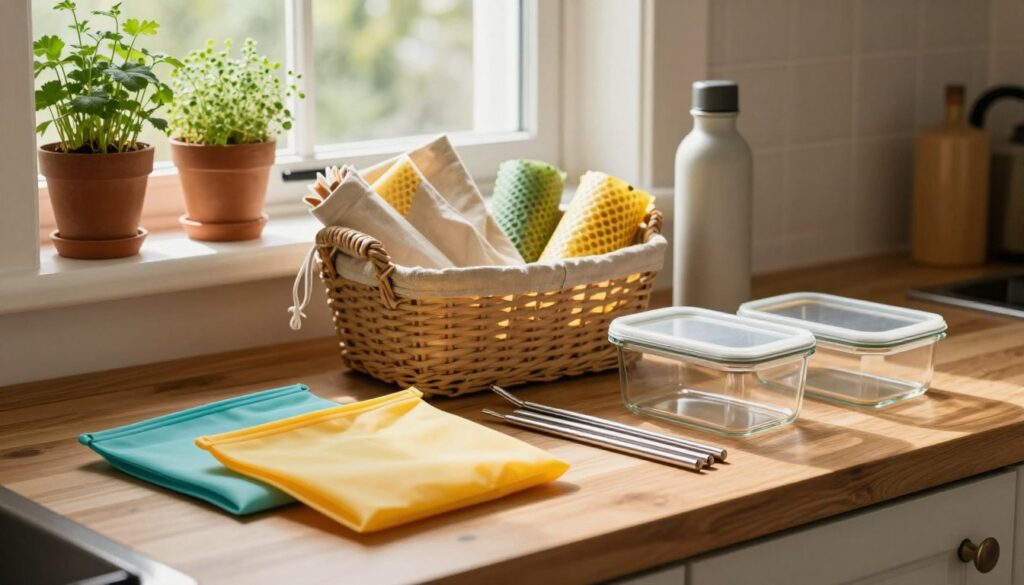
Prioritizing High-Impact Swaps First
Begin by finding out which items you use most. Swapping these daily items will give you quick savings and help the planet. Consistency is key when adding reusable essentials for saving money to your home.
Start with your kitchen or bathroom, where you’ll see waste drop fast. These small victories keep you motivated to keep going. Remember, every little bit counts, even if you’re not perfect.
Avoiding the Trap of Over-Purchasing
It’s natural to get excited about new products, but don’t buy too much. Buying too much can lead to clutter and undo your savings. Quality should always take priority over quantity when choosing new items.
Think carefully before buying something. Ask if it’s really needed in your daily life. Being thoughtful with your purchases helps you save money over time. Mindful consumption is key to a sustainable lifestyle.
Conclusion
Living sustainably helps your wallet and the planet. You can change your daily habits to save money and protect the environment. Choose items that last a long time.
Using reusable items is a smart move for any home. Brands like Stasher, Hydro Flask, and Marley’s Monsters make durable goods. These items help you save money by reducing waste.
Every small change leads to a cleaner home. You control your spending and cut down on trash. This change of heart makes you value what’s important more.
Begin by improving one area of your life. Soon, you’ll see how these items save you money and give you peace of mind. Your efforts will make the world a better place for all.