

Many start their journey to a sustainable home to help the planet. But, they might find out it also saves money. Shifting your perspective from quick fixes to long-term gains can change your finances.
According to the EPA’s waste and recycling data, small everyday changes at home add up to significant environmental impact.
So, does going zero waste save money? It’s about changing your daily habits. Cutting down on clutter and learning new skills can stop you from spending too much.
Knowing the zero waste lifestyle benefits shows how small steps add up. This guide offers tips on how to save money with zero waste in a friendly way.
Key Takeaways
- Switching to a sustainable lifestyle often cuts down on monthly costs.
- Less clutter means fewer impulse buys and less waste.
- Fixing or repurposing items saves money and builds skills.
- Choosing long-term value over quick fixes strengthens your budget.
- Small, steady changes in your habits can lead to big financial gains over time.
The Financial Reality: Does Going Zero Waste Save Money?
Starting a zero waste journey is often seen as good for the planet. But it’s also good for your wallet. Many think eco-friendly products are too expensive. Yet, sustainable living cost savings kick in when you stop buying things you use once and throw away.
Understanding the Upfront Investment vs. Long-Term Savings
Seeing the cost of a durable item can be daunting. But think of it as investing in durability. For instance, a family using 500 plastic bags a year spends $100 a year. Switching to reusable bags like Stasher or Qrumbles saves that money right away.
This change helps you manage your budget better. Instead of throwing money away, you invest in long-term utility. Over time, these small changes add up to big savings.
| Item Category | Disposable Cost (Annual) | Reusable Cost (One-time) | Net Savings (Year 2+) |
|---|---|---|---|
| Food Storage Bags | $100 | $40 | $100 |
| Paper Towels | $150 | $30 | $150 |
| Cleaning Sponges | $60 | $20 | $60 |
How Sustainable Living Shifts Your Spending Habits
The financial advantages of zero waste living go beyond just buying new items. It’s about choosing quality over quantity. This stops the cycle of constantly replacing things.
This way of shopping is a key zero waste lifestyle benefit. By picking items that last, you save money on cheap, low-quality goods. Your wallet will thank you for avoiding the “throwaway culture” that’s common today.
Step-by-Step Guide to Reducing Waste While Saving Cash
Starting a waste-free lifestyle can save you money. Learning how to save money with zero waste turns daily tasks into chances for growth. This guide shows you how to cut costs and help the environment.

Step One: Audit Your Current Trash and Spending
First, understand where your money goes. Track your trash for a week to see what you throw away most. You’ll find that sustainable living cost savings start with awareness.
Disposable items like plastic bin liners cost a lot. Cutting waste in half can save you $31.20 to $87.36 a year on trash bags. This shows that less waste means more money for you.
Step Two: Master the Art of Meal Planning to Eliminate Food Waste
Food waste hurts your budget. Throwing away spoiled food or leftovers is like throwing money away. Plan your meals to use every ingredient you buy.
- Check your pantry before shopping.
- Make a weekly menu with what you already have.
- Keep fresh produce fresh longer.
Step Three: Transition to Reusable Household Goods
Disposable items cost a lot over time. Switching to durable items stops the cycle of buying more. Think of these as long-term investments for your home.
Start with cloth rags or napkins instead of paper towels. Use beeswax wraps or glass containers instead of plastic wrap. Although they cost more upfront, they pay off in a few months.
Step Four: Adopt a Minimalist Approach to New Purchases
The best eco-friendly budgeting tips are to buy less. Before buying something, ask if you really need it. Minimalism helps avoid wasting money on clutter.
Choose quality over quantity when buying. Long-lasting items mean you don’t need to replace them often. Simplifying what you buy protects your wallet and the planet.
Essential Swaps That Pay for Themselves
Smart shopping choices are key to sustainable living cost savings that add up over time. By focusing on daily items, you can stop the cycle of constant replacement. This helps build a more resilient budget.
Choosing refurbished technology is a big way to enjoy the financial advantages of zero waste living. For example, buying a refurbished iPhone 14 can save you $278 compared to a new one.
Switching to Reusable Cleaning Supplies and Cloths
Disposable paper towels and chemical cleaners cost a lot every month. Switching to washable microfiber cloths or old cotton rags lets you clean without spending more.
Just toss these cloths in the laundry and reuse them hundreds of times. This simple change reduces your use of single-use products and saves money.
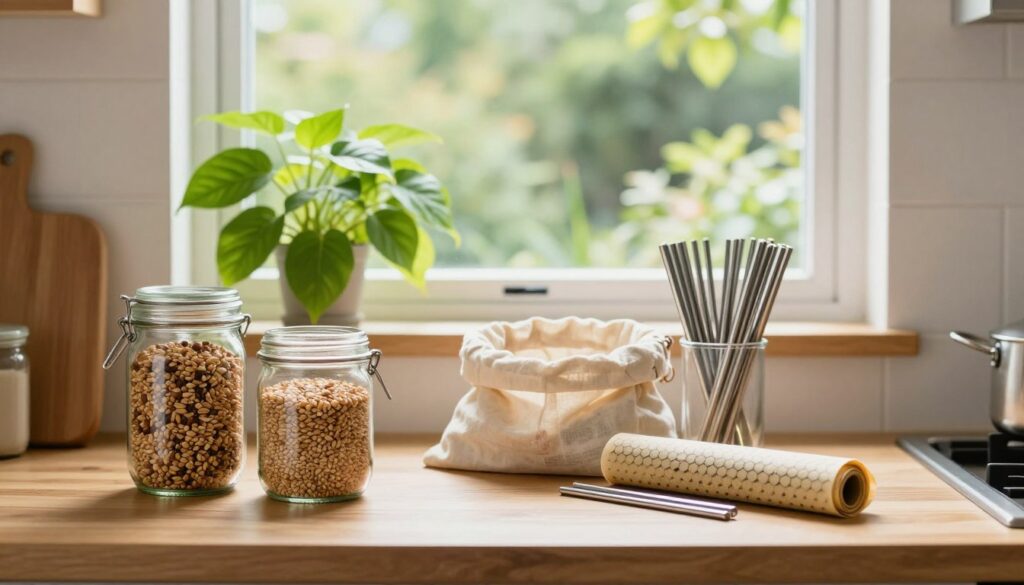
Investing in Quality Stainless Steel or Glass Containers
Plastic storage bags and containers often break or degrade, forcing you to buy more. Investing in high-quality stainless steel or glass containers is a permanent solution for your kitchen storage needs.
These materials are durable, easy to sanitize, and don’t leach chemicals into your food. Although they cost more upfront, they last for decades, making them a great value.
Utilizing Bulk Bins for Pantry Staples
Shopping in the bulk section is a great way to lower your grocery bill. By bringing your own containers, you avoid paying for packaging and marketing costs.
Benefits of Buying Dry Goods in Bulk
Buying in bulk lets you buy exactly what you need, reducing food waste. You also get lower unit prices, helping with your overall sustainable living cost savings.
Tips for Storing Bulk Items Properly
To keep bulk items fresh, store them in airtight glass jars in a cool, dark place. Labeling your containers with the purchase date helps track freshness and maintain the financial advantages of zero waste living.
| Item Category | Disposable Cost (Annual) | Reusable Cost (Initial) | Savings Over 3 Years |
|---|---|---|---|
| Cleaning Cloths | $120 | $20 | $340 |
| Food Storage | $80 | $50 | $190 |
| Pantry Staples | $600 | $450 | $1,350 |
Common Pitfalls That Can Increase Your Spending
To enjoy the financial advantages of zero waste living, watch out for common spending traps. It’s easy to fall for marketing tricks that promise a greener life but cost a lot. By using eco-friendly budgeting tips, you can tell what’s really needed and what’s just clutter.
Avoiding the Trap of Over-Buying Eco-Friendly Gadgets
The market is full of trendy gadgets that make your home look sustainable. Items like bamboo-handled scrub brushes and fancy silicone storage bags are pricey. Before buying, think if you really need it or if it’s just for looks.
True sustainability isn’t found in shopping carts. Minimalism helps save money. If you already have something that works, there’s no need to buy a new one just for looks.
Why Buying New Sustainable Products Isn’t Always Necessary
Many think they must replace all products with “green” ones right away. This can quickly drain your wallet. Instead, use up what you already have.
For example, cutting out laundry items like fabric softeners and color boosters can save you about $155 a year. Using what you already own is the most sustainable and cost-effective choice.
“The most sustainable product is the one you already own.”
Managing the Hidden Costs of Specialty Zero Waste Stores
Specialty zero waste shops are great for bulk items, but they’re often pricey. They might charge more than regular stores for basic items. Always compare prices to avoid paying too much.
Being a conscious consumer means looking beyond the label. You can enjoy the zero waste lifestyle benefits without spending too much by shopping at local farmers’ markets or buying in bulk at regular stores. Stay alert, stick to your budget, and remember your financial health is as important as the environment.
Conclusion
Starting a low-waste lifestyle changes how you think about buying things. It also helps save money. You can track your spending and see if zero waste is cheaper.
Choosing reusable items over disposable ones can save a lot of money each year. It takes time and patience to see the benefits. Brands like Mason Jar or Pyrex make items that last for years.
Small changes every day can lead to big changes. These tips help you live more sustainably and save money. You can make a difference and keep more money in your pocket.
Begin by checking one area of your home. Living mindfully helps your family and the planet. Enjoy the freedom of owning less and spending wisely.