
If you want practical zero waste laundry tips advice that fits a real budget, you’re in exactly the right place. Changing your laundry habits to be more eco-friendly is simple. By following a zero waste laundry routine, you can greatly reduce your impact on the environment. Plus, your clothes will stay fresh and clean. These easy steps can also cut down your utility bills.
According to the EPA’s waste and recycling data, small everyday changes at home add up to significant environmental impact over time.
You don’t have to change everything at once. Small, actionable steps can make a big difference. Whether it’s cutting down on plastic or saving water, these zero waste laundry tips guide you to a greener home.
Key Takeaways
- Switch to concentrated or plastic-free detergent sheets to eliminate bulky jugs.
- Wash your garments in cold water to save energy and extend fabric life.
- Use wool dryer balls to reduce drying time and soften clothes naturally.
- Air dry your items whenever possible to minimize electricity consumption.
- Repair small tears or loose buttons instead of discarding your favorite pieces.
Essential Zero Waste Laundry Tips for Your Home
Start making your laundry room more sustainable by looking at your habits. Many of us wash clothes too often, which harms them and wastes resources. In the U.S., over 13 million tonnes of clothes are thrown away each year. By using eco-friendly laundry practices, you can keep your clothes in good shape and out of landfills.
Assessing Your Current Laundry Habits
First, figure out how often you really need to wash clothes. Jeans and sweaters often don’t need washing after every wear. You can refresh them by airing them out or cleaning small stains.
“The greatest threat to our planet is the belief that someone else will save it.”
Keep a laundry basket for items that are almost ready for washing. This stops the cycle of overwashing that damages clothes and wastes water. Always try to wash a full load to save water and reduce washing cycles.
Setting Up a Plastic-Free Laundry Station
After you’ve changed your washing habits, look at the products you use. Most detergents come in big plastic jugs that pollute the world. Switching to a plastic-free station is key to sustainable laundry habits that are easy to follow.
Use concentrated detergent sheets or refillable glass jars instead of big plastic containers. These options are light, work well, and cut down your carbon footprint. These eco-friendly laundry practices make your laundry routine cleaner and more efficient.
| Feature | Traditional Setup | Zero Waste Setup |
|---|---|---|
| Packaging | Single-use plastic jugs | Cardboard or glass |
| Storage Space | High (bulky items) | Low (compact sheets) |
| Environmental Impact | High plastic waste | Minimal to zero waste |
| Transportation | Heavy (water-based) | Lightweight (concentrated) |
Selecting Sustainable Detergents and Cleaning Agents
Your laundry routine can make your home cleaner and the planet healthier. Many detergents have a hidden toxin called 1,4-Dioxane. It’s not listed on labels. By picking eco-conscious laundry solutions, you keep your family safe and help the environment.
Switching to Concentrated Detergent Sheets
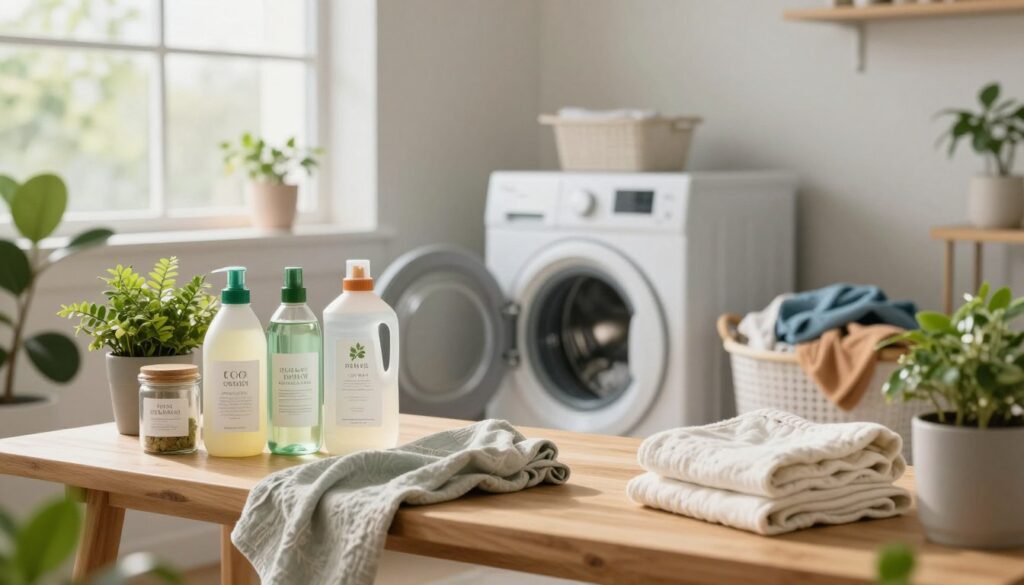
Concentrated detergent sheets are a top eco-friendly detergent recommendation. They come in lightweight, dissolvable strips. This means no more bulky plastic jugs that end up in landfills.
They are pre-measured, so you use just the right amount. This saves resources and prevents waste.
Utilizing Natural Alternatives Like Soap Nuts
Soap nuts are a great choice for a plant-based option. They are dried berries that clean clothes naturally. They contain saponin, a natural cleaner.
Soap nuts are fully compostable. They are a key part of green cleaning for clothes.
Making Your Own Eco-Friendly Fabric Softener
You don’t need expensive, chemical softeners. Making your own eco-conscious laundry solutions at home is easy and saves money. This way, you know exactly what touches your skin.
Using White Vinegar for Softening
White vinegar is a natural fabric softener. It breaks down mineral deposits and soap residue. Just add half a cup to your machine’s rinse cycle.
It makes your clothes feel fresh and clean. White vinegar works on almost any fabric type.
Adding Essential Oils for Natural Fragrance
Want a scent without synthetic additives? Use essential oils. Add a few drops of lavender or lemon oil to your vinegar rinse.
This gives a subtle, natural fragrance. These eco-friendly detergent recommendations show you can get great results naturally.
Optimizing Your Washing Machine for Efficiency
Your washing machine is often overlooked for home sustainability. Making small changes can greatly reduce waste in laundry. These adjustments save money and protect the environment.
Sorting Laundry to Reduce Water Usage
Sorting laundry wisely is key to a smart laundry day. Waiting for a full drum before washing saves water. This simple step cuts down on water use.
- Group items by fabric weight for even cleaning.
- Separate heavily soiled items from lightly worn clothes.
- Avoid mixing heavy towels with delicate garments to prevent unnecessary wear.
Choosing the Right Temperature Settings
Most energy used in washing clothes comes from heating water. Switching to cold water cycles is a big step towards sustainability. Modern detergents clean well in cold water, saving energy.
“The most sustainable load of laundry is the one washed in cold water, as it preserves both your clothes and the environment.”
Maintaining Your Machine to Extend Its Lifespan
A well-maintained machine runs better and lasts longer. Regular care prevents damage and keeps it efficient. Check your machine every few months to ensure it’s in good condition.
Cleaning the Filter Regularly
The filter catches lint, coins, and debris that could harm your pump. A clogged filter makes your machine work harder, wasting energy. Always check your manual to find and clean the filter monthly.
Preventing Mold with Proper Ventilation
Mold and mildew love damp, dark places like washing machines. Leave the door or lid slightly open after each cycle. This lets air in and keeps the drum dry, keeping clothes fresh and the machine clean.
Sustainable Fabric Care and Drying Techniques
Making small changes in your laundry routine can make a big difference. It helps your clothes last longer and is better for the planet. By taking care of your clothes after washing, you help reduce waste.
Air Drying Clothes to Save Energy
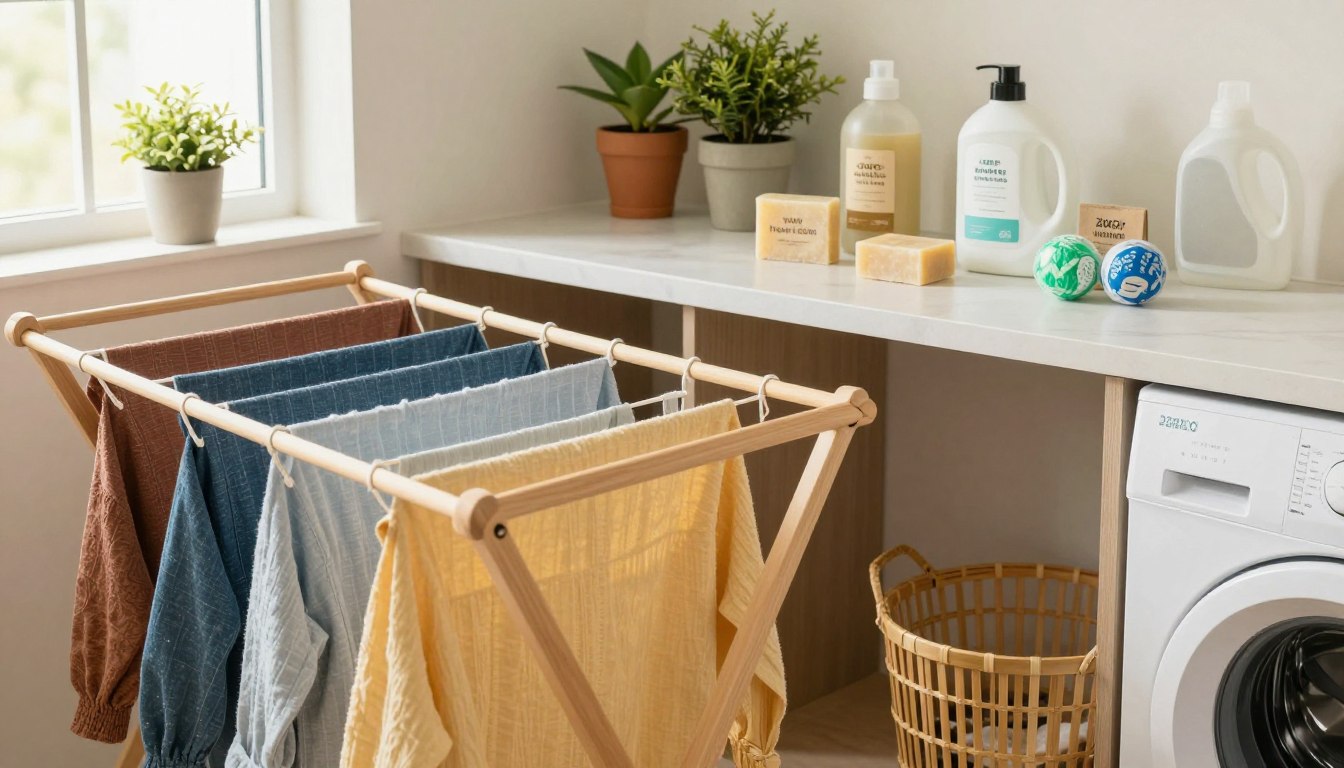
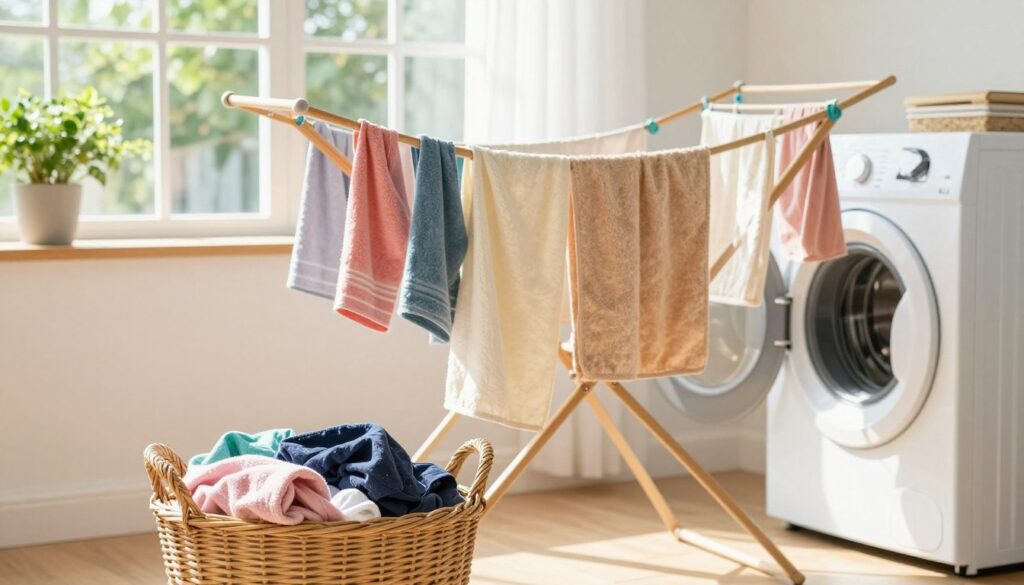
Not using the dryer is the best way to keep your clothes in top shape. Air drying avoids the heat damage that can weaken fabrics. Hanging your clothes on a rack or line is easy and saves money on energy.
Using Wool Dryer Balls Instead of Synthetic Sheets
Wool dryer balls are a great choice if you still want to use a dryer. They help clothes dry faster by improving airflow. Using these eco-conscious laundry solutions saves time and energy, and keeps clothes soft without harsh chemicals.
Repairing and Mending Instead of Replacing
Fixing clothes instead of throwing them away is key to sustainable care. It’s better for the environment than buying new. Learning to mend your clothes helps them last longer.
Basic Sewing Techniques for Longevity
You don’t need to be a pro to do simple repairs. A needle and thread can fix many issues quickly. Learning these basic skills lets you extend your clothes’ life and cut down on waste.
Removing Stains Naturally Without Harsh Chemicals
Stains often lead to clothes being thrown away too soon. But, you can remove most stains with items like baking soda, white vinegar, or lemon juice. These natural cleaners are gentle on fabrics and avoid harsh chemicals found in many cleaners.
Conclusion
Starting to make your household chores better is easy. It begins with making small, thoughtful choices. By choosing a zero waste laundry routine, you take a step towards a greener life.
You don’t have to change everything at once. Start with one or two changes this week. These small steps can make a big difference for your community and the planet.
By sticking to these habits, you help reduce plastic waste in oceans and landfills. Brands like Dropps or Tru Earth make it easy to ditch big plastic jugs. Every time you wash clothes, you’re helping them last longer.
Tell your friends or family about your efforts to live more sustainably. Making small changes in laundry can lead to big savings over time. Your actions show that even simple tasks can be powerful for the environment.