
Getting started with plastic free food storage ideas is easier than you think, and this guide walks you through every step without the overwhelm. Starting your journey to a sustainable home begins in your pantry. Many kitchen containers can harm your health. Choosing plastic alternatives keeps your family safe and reduces waste.
According to the EPA’s waste and recycling data, small everyday changes at home add up to significant environmental impact.
Studies show that micro-particles can get into our food. Switching to eco-conscious habits is key for a healthier life. These food storage ideas make your kitchen both useful and planet-friendly.
Every kitchen should reflect your values and be easy to use. Learn how easy changes can make your kitchen free from plastic. These plastic free food storage ideas guide you to a greener home.
Key Takeaways
- Reduce exposure to endocrine disruptors by replacing synthetic containers.
- Minimize your environmental footprint through sustainable kitchen habits.
- Prioritize long-term health by removing micro-particle sources from your pantry.
- Curate a functional, eco-friendly space with glass, metal, and silicone options.
- Implement simple, actionable steps to transition toward a greener lifestyle.
Assessing Your Current Kitchen Storage Habits
Changing your kitchen starts with looking at your daily containers. Before buying new items, know your current habits. This ensures your new purchases are intentional and long-lasting. It helps you see what’s useful and what’s just taking up space.
Identifying Plastic Waste in Your Pantry
Start by emptying your cabinets to see what you have. You’ll find mismatched lids, stained containers, and too many plastic bags. It’s time to be ruthless about what stays.
Check for signs of wear like deep scratches or warped edges. These can hide bacteria. Many people have more plastic than they need for meals. Look to remove:
- Cracked or warped food storage tubs.
- Single-use plastic bags from grocery shopping.
- Mismatched lids that no longer create a tight seal.
- Old takeout containers that were never meant for long-term use.
Evaluating Your Storage Needs and Space
After clearing clutter, think about what you really need. Do you buy in bulk or shop often? Knowing your habits helps pick the right eco-friendly food storage solutions.
“The most sustainable container is the one you already own and use consistently.”
Measure your shelves to fit new containers. This avoids buying things that don’t fit your life. Use the table below to see how different materials affect your kitchen.
| Material | Durability | Best Use |
|---|---|---|
| Glass | High | Dry goods and leftovers |
| Stainless Steel | Very High | Freezer and travel |
| Beeswax Wraps | Moderate | Produce and bowls |
By following these steps, you’re ready for a kitchen makeover. Picking the right eco-friendly food storage solutions will make your daily life easier and greener.
Essential Materials for Plastic Free Food Storage Ideas
Starting a plastic-free home begins with the right storage containers. Not all materials are the same. By picking sustainable food storage containers, you choose quality that lasts.
The Benefits of Glass Containers
Glass is a top choice for cooks because it’s non-porous and doesn’t leach chemicals. It’s safe for hot and acidic foods. Plus, you can see what’s inside, helping you avoid food waste.
- Non-toxic: Keeps your food pure and free from chemical odors.
- Versatile: Safe for the microwave, oven, and freezer.
- Easy to clean: Dishwasher safe and resistant to staining.
Utilizing Stainless Steel for Durability
Stainless steel is great for a plastic alternative food storage solution. It’s lightweight and perfect for lunches or freezer storage. Plus, it keeps light-sensitive items safe.
Stainless steel is almost indestructible. It lasts a long time, saving you money. It stays strong even after years of use.
Natural Alternatives Like Beeswax Wraps
For a flexible cover, try beeswax wraps. They’re breathable and compostable. Made from organic cotton, beeswax, resin, and jojoba oil, they keep food fresh.
Beeswax wraps fit your bowls or fruits and veggies. They’re a sustainable food storage containers choice. This helps create a healthier kitchen.
Step One: Decluttering and Organizing Your Cabinets
Starting a greener home journey begins with a cabinet audit. Clearing out your cupboards makes room for green kitchen organization ideas that stick. This step lets you see what storage you need and get rid of unused items.
Sorting Through Existing Plastic Containers
Begin by taking out all containers from your cabinets. Place them on your kitchen island or table. Sort them by size, shape, and condition. Be honest with yourself about which ones you really use.
- Discard any containers that are cracked, warped, or missing lids.
- Keep high-quality plastic items that are functional for non-food storage, like craft supplies or hardware.
- Donate gently used items that you don’t need, if they are clean and in good condition.
Proper Disposal and Recycling of Old Plastics
After sorting, it’s time to dispose of items properly. Not all plastics can go in curbside bins. Check your local guidelines for responsible disposal.
If plastics have recycling symbols, wash them well to remove food. This prevents them from ending up in landfills. For plastics that can’t be recycled, look for special centers in your area for hard-to-recycle materials.
Creating an Efficient Storage Layout
With your cabinets empty, design a layout to reduce plastic waste in the kitchen. Put your most used items at eye level. Efficiency is the secret to keeping a sustainable routine.
Use vertical shelf risers or drawer dividers to use space better. A tidy kitchen makes it easier to keep up with your eco-friendly habits. An organized kitchen is not just pretty; it’s a tool that supports your green lifestyle every day.
Step Two: Transitioning to Glass and Ceramic Solutions
Switching to non-toxic food storage solutions can make your cooking better. It keeps your food safe from harmful chemicals and microplastics. This change makes your kitchen cleaner and safer for your family.
Selecting Airtight Glass Jars for Dry Goods
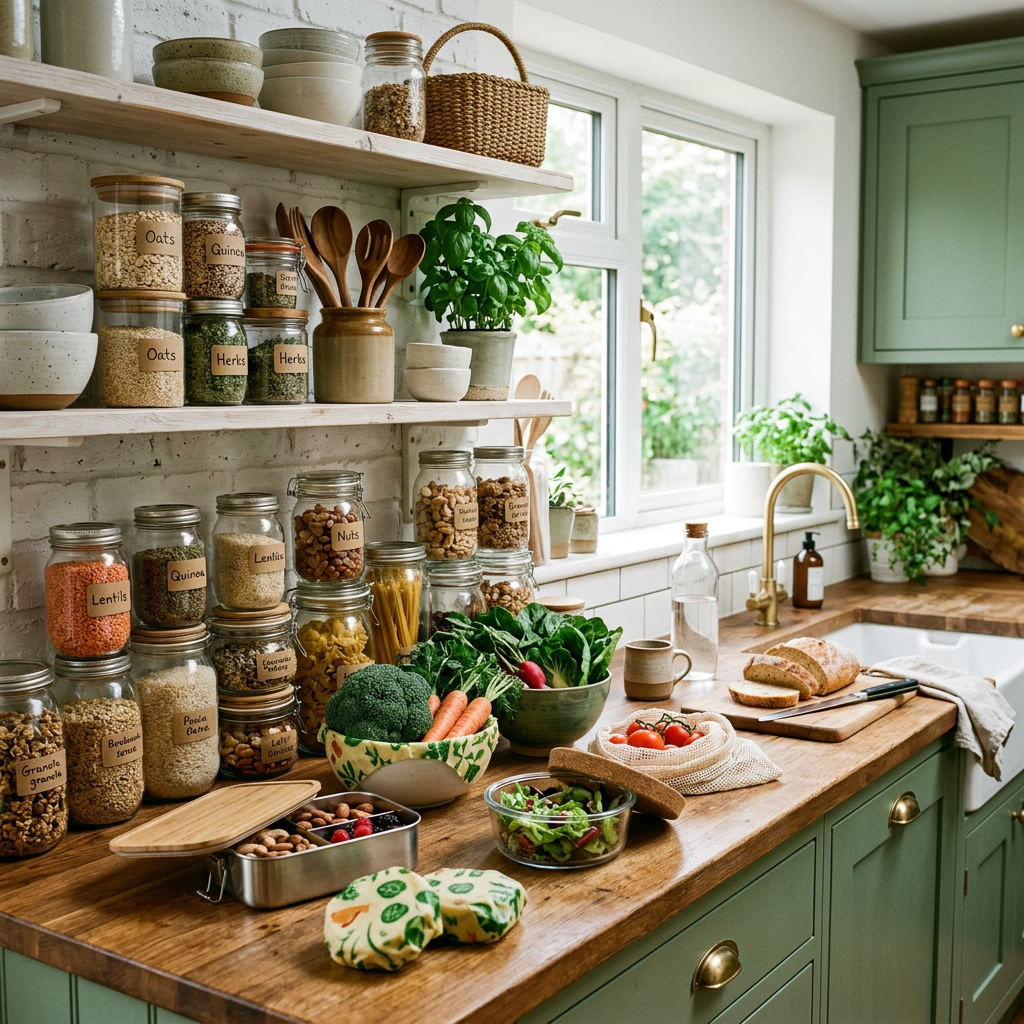
Glass is the best for storing food because it’s easy to clean and doesn’t absorb smells. Using airtight glass jars for rice, pasta, and nuts keeps them fresh. Look for jars with tight seals to keep moisture out.
Clear visibility is a big plus of glass jars. You can see when you need to buy more, making shopping easier. These jars make your pantry look neat and organized.
Using Ceramic Crocks for Produce
Ceramic crocks are great for storing vegetables like potatoes and onions. They have small holes for air, which stops them from sprouting too soon. Ceramic also keeps vegetables from getting light damage.
These containers keep your kitchen tidy and add a cozy feel. They’re strong, easy to clean, and keep your produce fresh. Adding them to your kitchen is a smart move for long-lasting, safe food storage.
Maintaining Your Glassware for Longevity
Proper care keeps your glass containers lasting long. Here are some easy tips:
- Hand wash lids with gaskets to prevent them from drying out or cracking.
- Use a soft bottle brush to clean the bottom of tall jars without scratching.
- Check your jars often for chips or cracks, focusing on the rim.
- Put heavier glass items on lower shelves to avoid drops and breakage.
By taking good care of your glassware, it will last for many years. Regular upkeep keeps your non-toxic food storage solutions looking and working great for years.
Step Three: Implementing Sustainable Cold Storage
Keeping food fresh doesn’t need single-use plastic wrap. You can find environmentally friendly food storage options that keep food fresh. This change reduces waste and keeps your kitchen clean and organized.
Storing Leftovers in Stainless Steel Tins
Stainless steel tins are a great plastic alternative food storage choice. They are durable and leak-proof, perfect for soups, stews, or veggies. They don’t absorb odors or stain, keeping your fridge fresh.
These tins are lightweight and stackable, saving space. They’re easy to move from fridge to stove or oven. This makes them essential for a waste-free home.
Using Silicone Stasher Bags for Freezer Items
Silicone bags are flexible and save space in the freezer. They handle extreme temperatures, preventing freezer burn. They’re a great environmentally friendly food storage options for bulk items like berries, meats, or meals.
These bags are easy to clean and can be reused many times. Their airtight seal keeps food fresh. This switch is great for busy homes.
Managing Refrigerator Space Without Plastic Wrap
Wondering how to cover bowls or half-cut produce without plastic? There are creative ways to keep items covered and fresh:
- Use inverted plates: Place a small plate over a bowl for a reusable lid.
- Glass storage lids: Get glass containers with matching silicone or glass covers.
- Natural wraps: Use beeswax wraps to seal bowls or cut fruits and veggies.
By using these simple methods, you can ditch disposable wraps. Organizing your fridge with these tools makes it healthier. Enjoy a plastic-free kitchen and the peace of mind that comes with it.
Step Four: Adopting Natural Wraps and Covers
Switching to natural wraps and covers is a big step for a green home. These environmentally friendly food storage options help you ditch single-use plastics. They keep your food fresh while making your home healthier.
How to Use and Clean Beeswax Wraps
Beeswax wraps are great for covering bowls or wrapping cheese. Just warm them up with your hands to shape them around your food. Once cool, they seal your food in a snug, breathable way.
To clean them, use cool water and a mild soap. Don’t use hot water, as it melts the wax. Air dry them, and they’re ready for next time.
DIY Fabric Bowl Covers for Quick Storage
DIY fabric bowl covers are quick and easy. They have an elastic edge that fits over bowls fast. They’re perfect for non-toxic food storage solutions when you need to cover something quickly.
Make them at home with scrap fabric and elastic. They’re machine washable and keep your food fresh. They’re a durable alternative to plastic wrap.
Choosing Organic Cotton Produce Bags
At the grocery store, skip the thin plastic bags. Organic cotton produce bags are a great choice. They’re lightweight, washable, and let your veggies breathe.
These bags avoid synthetic materials that can harm your food. They’re strong enough for heavy items like potatoes. Using them reduces your plastic use every day.
| Storage Method | Best Use Case | Cleaning Method | Lifespan |
|---|---|---|---|
| Beeswax Wraps | Cheese and Produce | Cool water and soap | 6-12 months |
| Fabric Covers | Bowls and Leftovers | Machine wash | Years |
| Cotton Bags | Bulk Produce | Machine wash | Years |
Step Five: Maintaining Your Zero Waste Kitchen Routine
Creating a sustainable kitchen routine is key to lasting success. The initial excitement is just the start. To keep your kitchen organized, follow these zero waste kitchen storage tips.
Establishing a Cleaning Schedule for Containers
Glass and stainless steel containers are durable but need care. Wash them with warm, soapy water after each use to avoid residue. Deep cleaning them monthly keeps them clear and odor-free.
For tough stains, soak containers in vinegar and baking soda. This method is safe for your family and keeps containers in great shape. Always dry containers completely before storing to prevent moisture damage.
Tips for Labeling Without Plastic Tape
You don’t need plastic labels for a tidy pantry. Use washable glass markers or liquid chalk pens that clean off with a damp cloth. These tools let you update labels easily.
For a rustic look, try masking tape or twine with cardboard tags. These options add charm while staying eco-friendly. Using these green kitchen organization ideas makes your pantry look intentional and beautiful.
Refilling Bulk Goods to Avoid Packaging
Reducing waste starts by avoiding single-use packaging. Visit bulk stores to refill your jars directly from large dispensers. This eliminates plastic bags and cardboard boxes.
- Bring your own containers to the store to weigh them before filling.
- Keep a dedicated tote bag in your car for refill trips.
- Buy staples like grains, nuts, and spices in bulk to save time.
Refilling your supplies creates a closed-loop system. It simplifies grocery shopping. Over time, this habit becomes second nature, making your kitchen efficient and sustainable.
Overcoming Common Challenges in a Plastic Free Kitchen
Starting a greener lifestyle is a journey that needs patience and problem-solving skills. It’s rewarding, but you might face challenges. By tackling these obstacles, you can keep using plastic free food storage ideas without trouble.
Handling Difficult Items Like Leafy Greens
Keeping delicate produce fresh without plastic bags can be tough. Leafy greens wilt if they lose moisture or sit in water. To reduce plastic waste in the kitchen, wrap your greens in a clean, damp cotton towel after washing.
This method keeps your greens crisp for days. You can also use a stainless steel crisper drawer insert for better airflow. These simple steps help your produce stay fresh while you help the planet.
Budget-Friendly Ways to Build Your Collection
You don’t have to replace everything at once to be sustainable. Building a sustainable collection is a gradual process. Start by using glass jars from pasta sauce, pickles, or nut butters instead of buying new ones.
Thrift stores and garage sales are great for finding glass and ceramic containers at low prices. By using what you already have, you save money and create a beautiful space. Remember, it’s more important to be consistent than to have a perfect set of containers.
Staying Consistent When Dining Out or Traveling
Keeping up your habits when you’re away from home can be hard, but it’s doable. Carry a small kit with a lightweight stainless steel container or a silicone pouch for leftovers. When dining out, ask your server to put your food in your container.
Most restaurants will do this if you ask nicely before your meal. This small action helps you reduce plastic waste in the kitchen and beyond, even when you’re on the move. With these tools, staying consistent becomes easy.
| Food Item | Best Storage Material | Key Benefit |
|---|---|---|
| Leafy Greens | Glass with Cotton Towel | Maintains Humidity |
| Dry Grains | Repurposed Glass Jars | Pest Prevention |
| Leftover Meals | Stainless Steel Tins | Durable & Lightweight |
| Fresh Berries | Ceramic Bowls | Prevents Crushing |
Conclusion
Turning your kitchen into a plastic-free zone is great for your health and the planet. Every choice you make, like using glass jars or stainless steel, helps save our resources.
You have the power to change your home’s habits with small steps. By following these zero waste tips, you set a good example. Your efforts inspire others who see your home.
Don’t worry if it takes time to get everything right. It’s the effort that counts, not being perfect. You’re joining a movement that values quality over quick fixes.
Take a look at your pantry now and be proud of what you’ve achieved. Your actions show you care about the planet and want a cleaner world. Keep finding new ways to cut down on waste and enjoy a tidy, plastic-free kitchen.