
These zero waste tips for beginners steps make sustainable living simple and budget-friendly — here’s exactly how to get started. Ever looked at your trash bin and felt uneasy? You’re not alone in wanting to protect our planet. Every choice you make at home can help create a cleaner future for all.
The United States EPA said we threw away 292.4 million tons of trash in 2018. This number might seem huge, but you can make a difference. Starting a sustainable lifestyle for beginners is simpler than you think.
This beginner’s guide to zero waste shows you how to live more mindfully. By following these zero waste tips for beginners, you can lessen your impact on the environment. Plus, you’ll save money. Remember, it’s the small steps that count, not being perfect.
Key Takeaways
- Individual actions help reduce the 292.4 million tons of annual waste.
- Focus on making small, consistent changes rather than seeking perfection.
- Saving money is a natural benefit of consuming less and reusing more.
- A sustainable path improves your connection to the environment.
- Starting your journey today creates a positive impact for future generations.
Understanding the Zero Waste Movement
If you’re curious about how to start zero waste living, you need to understand the basics. This movement isn’t about being perfect right away. It’s about making choices that reduce your impact on the environment. It’s a simple beginner’s guide to zero waste for those wanting to help the planet.
What Does Zero Waste Mean?
Zero waste is about changing how we use resources. It aims to make sure nothing goes to waste. People follow the 5 R’s hierarchy:
- Refuse: Say no to items you don’t need, like single-use plastics.
- Reduce: Use less stuff and buy less.
- Reuse: Pick items that last longer instead of disposable ones.
- Recycle: Recycle when you can’t reuse or refuse.
- Rot: Compost food waste to enrich the soil.
“The greatest threat to our planet is the belief that someone else will save it.”
The Benefits of Going Zero Waste
The need for change is urgent. The UN says waste will grow from 2.1 billion tonnes in 2023 to 3.8 billion tonnes by 2050. By choosing zero waste, you help reduce harm to health and the environment.
This lifestyle also has personal benefits. You’ll save money by buying less and avoiding packaging. Plus, you help keep your community clean by reducing toxic waste.
Assessing Your Current Waste
Did you know the average American throws away nearly 4.9 pounds of trash daily? To reduce waste at home, you must first face your current garbage output. By setting a baseline, you can track your progress and stay motivated.
Conducting a Waste Audit
A waste audit is a simple yet powerful tool for any beginner’s guide to zero waste. For one week, collect all your trash in a designated area. After the week, spread out your waste to see what you’re throwing away.
Wear gloves and sort your items into piles by material. You’ll be surprised by how much could have been recycled or composted. This hands-on experience gives you the clarity needed to change your habits.
Identifying Key Waste Areas
After sorting your trash, look for patterns to learn how to start zero waste living. Most households find their waste falls into three main categories: food scraps, single-use packaging, and bathroom disposables. Identifying these areas helps you focus your efforts where they matter most.
If you see a lot of plastic food packaging, work on your grocery shopping habits next. If your bin is full of paper towels or bathroom products, start with sustainable swaps for those items. By tackling your biggest waste sources first, you can make big changes without feeling overwhelmed.
Simple Swaps for Your Kitchen
Changing your kitchen can make a big difference in living green. Small changes in your daily life can greatly reduce waste and save money. This is all without using disposable items.
Replace Plastic Wrap with Beeswax Wraps
Plastic wrap adds a lot to our trash. But, you can switch to beeswax wraps instead. These wraps are made from beeswax, organic cotton, jojoba oil, and pine resin.
They stick to your food and let it breathe, keeping it fresh longer. When they get old, you can compost them. This makes them a full circle product for your home.
“The greatest threat to our planet is the belief that someone else will save it.”
Use Reusable Produce Bags
Reducing waste starts with how we shop for food. Instead of plastic bags, use your own mesh bags. They’re light, washable, and last a long time.
These bags let your food breathe, which can help it last longer than plastic bags. This is a big step toward less waste.
Opt for Bulk Bins Over Packaged Goods
Shopping in bulk is a great way to cut down on waste. It means no cardboard or plastic packaging. Use your own jars or bags for items like grains, nuts, and spices.
- Cost Savings: Buying in bulk is often cheaper.
- Portion Control: You only buy what you need.
- Less Clutter: Your pantry stays organized without big boxes.
Choosing bulk items saves you money and reduces waste. It’s a big step toward a greener kitchen.
Zero Waste Personal Care Products
Changing your daily hygiene routine is a big step towards being eco-friendly. Start by checking what you already have in your bathroom. Use up what you have before buying new items. This way, you make sure nothing is wasted.
Ditching Disposable Razors
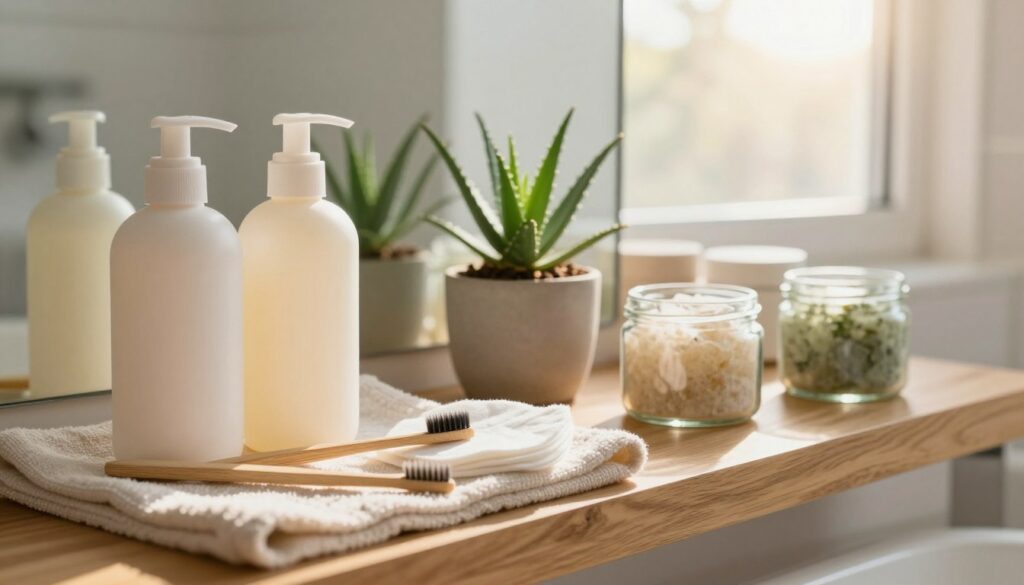
Disposable razors often end up in landfills because they can’t be recycled. Switching to a stainless steel safety razor is a smart move. These razors last for years, and you only need to replace the small metal blades, which can be recycled.
The Benefits of Bar Soap Over Liquid
Liquid body wash and shampoo come in big plastic bottles that use a lot of energy to transport. Bar soap doesn’t have this packaging problem. Plus, it’s more concentrated, so it lasts longer and saves money.
How to Choose Sustainable Cosmetics
When you’re shopping for cosmetics, look for brands that use refillable containers or compostable packaging. Always check the ingredients to avoid microplastics and harsh chemicals. These simple steps to zero waste protect your skin and the planet.
The table below shows how common bathroom items compare to their eco-friendly alternatives:
| Disposable Item | Sustainable Alternative | Environmental Impact |
|---|---|---|
| Plastic Razor | Safety Razor | Reduces plastic waste significantly |
| Liquid Soap Bottle | Bar Soap | Eliminates single-use plastic |
| Plastic Applicator Tampons | Menstrual Cup | Diverts 10,000 items from landfills |
Remember, the average woman uses 10,000 tampons and plastic applicators in her lifetime. Switching to a menstrual cup or organic cotton is a big step. Every change you make helps make the world a healthier place.
Eco-Friendly Alternatives for Cleaning Supplies
You can keep your home clean and green by changing your cleaning habits. Many products come in single-use plastic and harmful chemicals. These end up in our water. By thinking differently, you can find eco-friendly living ideas that make your home healthy and sustainable.
DIY Cleaning Solutions
Making your own cleaners is a great way to help the planet. Mix white vinegar, water, and lemon peels for a strong all-purpose spray. Baking soda is good for scrubbing, and castile soap works well for floors and surfaces.
Using glass spray bottles cuts down on plastic waste. These homemade cleaners are cost-effective and don’t have harmful fumes. You control what touches your home.
Reusable Cleaning Cloths
Paper towels are a big waste problem. Cut up old clothes or towels to make reusable cloths. They soak up spills well and can be washed with your laundry.
Keep a basket for dirty cloths to always have them ready. This is a key simple step to zero waste in your kitchen or bathroom. It saves money and reduces waste.
Eco-Conscious Brands to Consider
When buying cleaning products, choose eco-friendly brands. Look for refillable systems or concentrated formulas. Check the ingredients for biodegradable and fragrance-free options.
Support companies that use recycled materials for their packaging. Your choice helps the industry become more sustainable. It makes going green easier.
Sustainable Shopping Practices
Adopting sustainable shopping practices is a great way to reduce your environmental impact. By focusing on what you need, you can cut down on waste. These eco-friendly habits for beginners are the first steps to a greener lifestyle.
The Importance of Mindful Shopping
Mindful shopping means thinking before you buy. Ask yourself if you really need something or if it will just get thrown away. Choosing items that last longer is better for the planet.
“The most sustainable product is the one you already own.”
By following these zero waste lifestyle tips, shopping becomes more about need than want. This approach reduces waste and keeps your space tidy. Even though it might cost more, it saves money and resources in the long run.
Supporting Local and Eco-Friendly Businesses
Where you spend your money matters. Supporting local farmers and small businesses helps the environment. Buying secondhand also helps reduce waste and carbon emissions.
| Shopping Habit | Traditional Approach | Sustainable Approach |
|---|---|---|
| Product Sourcing | Mass-produced, global | Local, ethical, small-batch |
| Item Lifespan | Disposable, short-term | Durable, repairable |
| Packaging | Excessive plastic | Minimal or compostable |
| Acquisition | New, impulse buying | Secondhand, intentional |
Starting these eco-friendly habits for beginners is easy. Begin by choosing local or secondhand items for your next purchase. Every choice you make helps the planet and supports a greener future.
Dealing with Food Waste
Did you know that nearly 30% to 40% of food in the United States ends up in landfills? This waste is a big problem because it leads to methane emissions. By following zero waste lifestyle tips, you can change how you handle food at home.
Meal Planning Strategies
Meal planning is key to avoiding food waste and saving money. Before shopping, check what you already have. This helps you only buy what you need for the week.
Plan meals using ingredients that are about to expire. If you have extra veggies, cook in bulk or freeze them. These eco-friendly living ideas save you money and reduce waste.
Composting Basics for Beginners
Composting is a great way to reduce waste at home. It turns food scraps into soil for your garden. This keeps organic waste out of landfills and reduces harmful gases.
Start with a small bin in your kitchen or a spot in your yard. Mix “greens” like veggie scraps with “browns” like leaves or cardboard. Over time, this creates valuable compost for your plants.
Embracing the Zero Waste Lifestyle
Starting a sustainable lifestyle for beginners is a long-term commitment. You don’t have to change everything at once. Instead, make small, consistent adjustments that fit into your daily life.
Setting Realistic Goals
Begin by decluttering your space with purpose. Sort items into donate, sell, recycle, or repurpose piles. This helps you see what you really need and keeps waste down.
Set achievable goals to avoid feeling overwhelmed. These zero waste tips for beginners aim to build lasting habits, not perfection. Every time you choose to reuse something, you help the planet.
Building a Supportive Community
You don’t have to go it alone. Connecting with others who value sustainability offers accountability and encouragement. Join local groups or online forums to share your journey.
Being around people who think like you can introduce new eco-friendly habits for beginners. Sharing your wins and struggles can motivate others to start their own low-waste journey. Together, we can make a big difference.
Resources for Continued Learning
Starting a sustainable lifestyle is a journey that never ends. You can always get better by learning from experts. They make complex environmental ideas easy to understand.
Educational Media and Literature
Books are a great place to start. “Sustainable Living, Minimalism, and Zero Waste: A Beginner’s Guide” by B.R. Pohl is a great read. It helps you understand how to live more simply.
Documentaries like “A Plastic Ocean” show the impact of our choices. They help us see why what we do matters for the planet.
Connecting with Like-Minded People
Having friends who care about the environment makes a big difference. Online forums and social media groups are perfect for sharing tips. They’re places to get help and celebrate your successes.
Changing the world is a long-term effort. Keep exploring, ask questions, and get involved in your community. Every little change helps make our planet healthier for all of us.