
This guide covers zero waste grocery shopping on a budget in plain, honest terms — no expensive products required, no perfection needed. Did you know that over 30 percent of all food in the UK ends up in the trash? This is a shocking fact that shows we need to change our ways. You can make your kitchen routine better without spending more money.
Many think sustainable living means buying expensive items. But, mastering zero waste grocery shopping on a budget is about changing your habits. It’s not about buying fancy things, but using what you already have wisely.
This guide offers actionable steps to start reducing your environmental impact today. By making small, consistent changes, you can save money and help the planet. Let’s look at how to improve your kitchen habits for lasting success.
Key Takeaways
- Understand the impact of household food loss.
- Focus on habit shifts instead of expensive products.
- Learn practical ways to save money while being sustainable.
- Implement simple, daily routines for better results.
- Start your journey toward a more efficient kitchen today.
The Philosophy of Sustainable and Affordable Eating
Starting your journey to affordable sustainable living means changing how you buy food. It’s about valuing long-term benefits over quick fixes. By choosing sustainable grocery shopping, you help the planet and save money.
Understanding the True Cost of Convenience
Today’s food culture often leads us to buy pre-packaged, single-serve items for convenience. But, this results in a lot of waste. Americans throw away nearly 40 percent of the food they buy.
This habit wastes money and harms the environment. It affects us all. When you choose convenience, you’re often paying for extra plastic and marketing costs. Big stores like Kroger aim to cut food waste to zero by 2025.
You can help by picking items with less packaging and waste.
Why Zero Waste Does Not Mean Higher Prices
Many think eco-friendly living is expensive. But, eco-friendly shopping tips often lead to whole foods like grains, beans, and seasonal produce. These are usually cheaper than processed foods.
Investing in quality helps you save money and reduce waste. Buying bulk staples saves you from expensive packaging. This shows you can live sustainably without spending more.
Planning Your Meals to Minimize Food Waste
Start your journey to a greener home with a pen, paper, and your pantry. Taking control of your kitchen habits can greatly reduce your environmental impact. This proactive step is key to low waste shopping and avoiding the common mistake of buying too much.
Conducting a Kitchen Inventory Audit
Before you shop, know what you already have. Open your cupboards, check the fridge, and freezer. Taking stock helps you avoid buying things you already have.
Write down what you have to see your current supplies clearly. This simple step is a powerful way to reduce waste while grocery shopping. You might find hidden ingredients for a tasty meal.
Creating a Realistic Weekly Meal Plan
With your inventory in mind, plan meals that fit your lifestyle. A realistic plan ensures every ingredient has a purpose. Choose versatile recipes that use common ingredients.
Plan your meals for the next week, including leftovers. This keeps your kitchen organized and prevents food waste. A clear plan helps you avoid letting fresh produce spoil.
Writing a Grocery List That Prevents Impulse Buys
Turn your meal plan into a detailed shopping list. Organize it by store section for an efficient trip. This method is key to reducing waste while grocery shopping by keeping you focused.
Stick to your list to avoid impulse buys that waste packaging and food. If you see something not on your list, think if it’s really needed. This discipline is essential for low waste shopping and saving money.
Mastering Zero Waste Grocery Shopping on a Budget
It’s possible to save money and protect the planet with a few smart changes. By focusing on zero waste grocery shopping on a budget, you can reduce waste and lower your expenses. You’ll avoid unnecessary packaging and keep your wallet full.
Identifying Affordable Bulk Food Sources
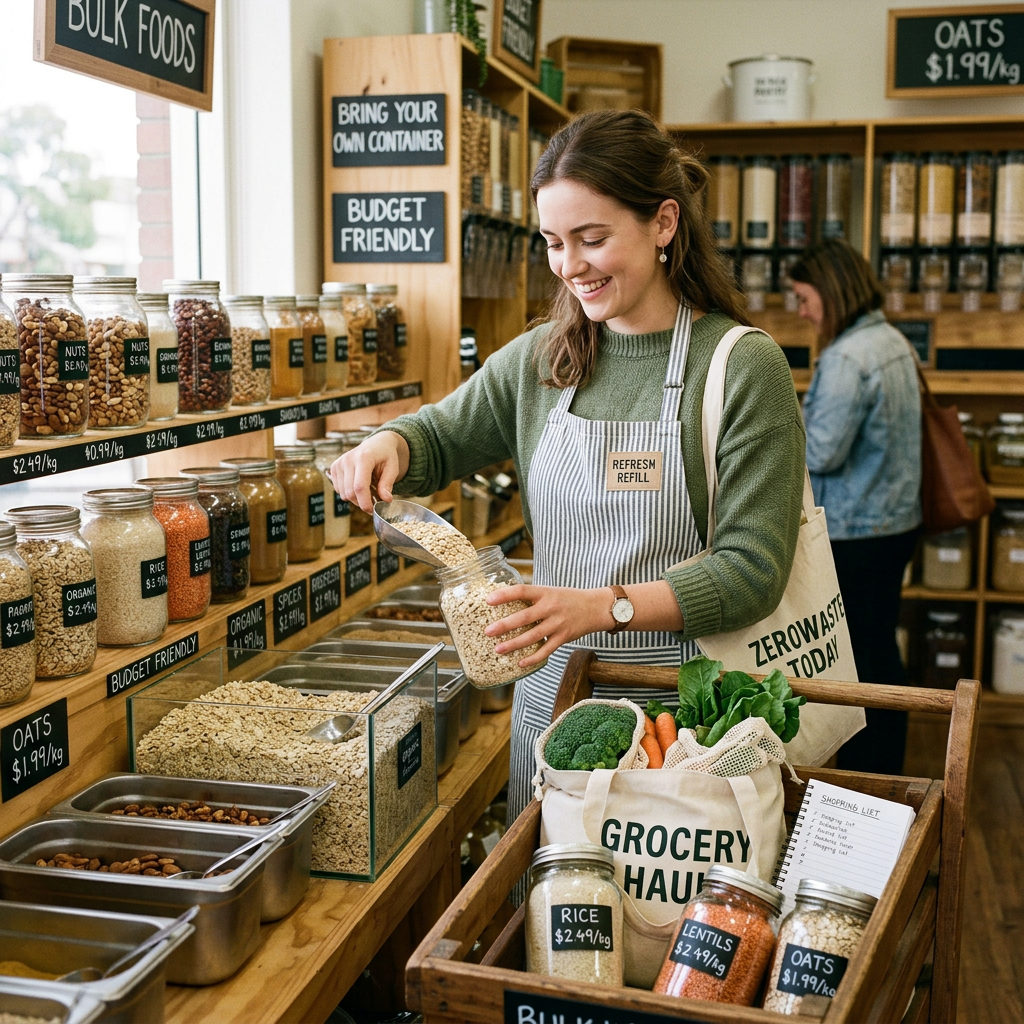
The bulk aisle is key to avoiding plastic. Stores like WinCo Foods have bins for you to scoop what you need. Buying only what you need saves money and prevents waste.
Look for local food cooperatives or independent stores for package-free items. They often get grains and spices from nearby farmers, saving on shipping. Always check the unit price to get the best deal.
Comparing Prices Between Local Markets and Big Box Stores
Choosing where to shop depends on your needs and what’s available. Big box stores might have cheaper bulk items, but local markets offer better quality produce. Here’s a table to help you decide.
| Shopping Venue | Price Point | Packaging Level | Product Variety |
|---|---|---|---|
| Big Box Stores | Low | Moderate | High |
| Local Farmers Markets | Moderate | Very Low | Seasonal |
| Natural Food Co-ops | High | Minimal | Specialized |
Utilizing Seasonal Produce to Save Money
One great budget-friendly zero waste tip is to eat with the seasons. Produce in season is cheaper, fresher, and needs less energy to get to you. Buying strawberries in summer or squash in fall saves a lot of money.
By being flexible with your meals and using what’s in season, you can save a lot. This way, your kitchen stays sustainable and affordable. It’s all about making smart choices.
Essential Gear for Your Sustainable Shopping Trips
Starting your journey to sustainable grocery shopping is easier with the right tools. Good equipment makes your trips to the market efficient and stress-free. By preparing ahead, you avoid single-use plastics and keep your routine organized.
Choosing Durable Reusable Produce Bags
Investing in quality produce bags changes your environmentally conscious grocery shopping routine. Look for bags made from organic cotton or fine mesh. These materials are washable and last long. They let your fruits and veggies breathe, keeping them fresh longer.
Repurposing Glass Jars for Bulk Items
You don’t need to buy expensive containers for a zero-waste pantry. Clean and reuse glass jars from pasta sauce, pickles, or nut butters. These jars are perfect for keeping your pantry organized and free from plastic. Always weigh your empty jars before filling to get accurate pricing.
Selecting Sturdy Totes for Heavy Loads
Carrying heavy groceries needs bags that are both comfortable and durable. Choose totes with reinforced stitching and wide straps for even weight distribution. A sturdy tote prevents broken handles and makes sustainable grocery shopping more comfortable.
| Gear Item | Best Material | Primary Benefit |
|---|---|---|
| Produce Bags | Organic Cotton | Breathability |
| Bulk Containers | Recycled Glass | Plastic-Free |
| Shopping Totes | Heavy-Duty Canvas | Weight Capacity |
Navigating the Bulk Aisle Like a Pro
Learning to shop in the bulk section is a big step towards low waste shopping. At first, the many bins might seem too much. But, they let you buy just what you need, without extra packaging.
Shopping in these aisles helps you save money and reduce waste. It gives you more control over your spending and the environment.
Understanding Tare Weight and How to Use It
The key concept is tare weight. It’s the weight of your empty container, like a jar or bag, before you fill it. Most stores ask you to weigh it at the customer service desk or a scale station before you start.
After weighing, write down the number or use a sticker from the store. At checkout, the cashier will subtract this from the total weight of your filled container. This way, you only pay for what’s inside, making your low waste shopping fair and accurate.
Selecting High-Quality Staples in Bulk
When buying in bulk, choose items that are fresh and tasty. Look for bins that are restocked often. The quality is often shown by the color and texture of the items.
- Check for freshness: Make sure nuts and seeds smell good, not stale.
- Look for color: Bright spices and grains mean better quality.
- Test the seal: Only buy from bins with tight lids to keep things fresh.
Avoiding Common Pitfalls of Bulk Buying
It’s easy to get carried away with the variety and buy too much. A common mistake is buying too much and having it spoil. Start with small amounts to test new ingredients.
Keep track of what you have at home to avoid buying too much. If you have leftovers, share them with friends or neighbors. Smart planning helps make bulk buying a sustainable habit that saves you money every week.
Smart Strategies for Fresh Produce Selection
Making smart choices in the produce section is a simple way to practice green shopping on a budget. Fresh fruits and vegetables often come wrapped in unnecessary plastic, which creates significant waste. By changing how you select your items, you can reduce your environmental footprint while keeping your grocery bill low.
Buying Loose Vegetables Instead of Pre-Packaged
When you reach for loose produce, you avoid paying for the weight of plastic bags and trays. Many supermarkets charge a premium for pre-cut or pre-packaged items, even though they offer less value. Choosing individual pieces allows you to inspect the quality of each item before it goes into your cart.
You can bring your own reusable mesh bags to keep your items organized. This small habit prevents the need for those thin, single-use plastic bags provided at the store. It is a highly effective way to keep your kitchen free from excess packaging.
Supporting Local Farmers Markets for Better Value
Engaging in environmentally conscious grocery shopping often leads you directly to your local farmers market. These markets frequently offer produce that is harvested at the peak of ripeness. Because the food travels a shorter distance, it often stays fresh much longer than items shipped across the country.
You will find that seasonal items at these markets are often priced competitively compared to organic options in big-box stores. Building a relationship with local growers also gives you insight into how your food is grown. This connection adds real value to your meals and supports your local economy.
Learning to Store Produce to Extend Shelf Life
Proper storage is the final step in your green shopping on a budget strategy. If you store your items correctly, you prevent spoilage and ensure that every dollar you spend is well-utilized. Follow these simple tips to keep your produce crisp and delicious:
- Keep greens in a container with a damp cloth to maintain moisture levels.
- Store root vegetables in a cool, dark, and dry place to prevent sprouting.
- Separate ethylene-producing fruits like apples from sensitive vegetables to avoid premature ripening.
- Wash your produce only right before you plan to eat it to prevent mold growth.
Reducing Waste in the Dairy and Protein Sections
Shopping for groceries can be greener once you know how to tackle the dairy and protein sections. These areas are often filled with plastic packaging. But, with a few simple tips, you can enjoy your favorite foods without adding to the trash.
Finding Plastic-Free Alternatives for Dairy
Look for dairy products in glass or cardboard instead of plastic. Many local creameries offer milk in returnable glass bottles. Just rinse and return them for a deposit. This small change makes a big difference for the environment.
For plant-based options, try making your own nut milks at home. You need just a bag of bulk nuts and a blender. This way, you get fresh, tasty milk without any plastic cartons. It’s better for the planet and often tastes better than store-bought.
Sourcing Sustainable Proteins Without Excessive Packaging
When buying meat or fish, skip the pre-packaged aisle and go to the butcher counter. Ask the butcher to put your items in your own clean, reusable container. Most shops will do this if you bring your own container.
For plant-based proteins like tofu or tempeh, look for brands with minimal wrapping or bulk options. You can also use the salad and olive bars in many stores. These are great for buying small amounts of ingredients like marinated tofu or chickpeas. This helps avoid waste and unnecessary plastic.
Buying in Larger Quantities to Reduce Unit Costs
Buying protein and dairy in bulk is smart for saving money and reducing waste. A bigger block of cheese or a larger container of yogurt means less packaging per ounce. Always check the unit price on the shelf tag to get the best deal.
- Choose glass-bottled milk when available.
- Bring your own containers to the butcher counter.
- Use salad bars for precise portion control.
- Buy larger sizes to minimize total packaging waste.
Creative Ways to Use Scraps and Leftovers
Your kitchen is full of hidden treasures in scraps and leftovers. By changing how you handle these items, you can save money and help the environment. Food waste in landfills is a big problem, and your actions can make a big difference.
Transforming Vegetable Peels into Nutrient-Rich Broth
Don’t throw away carrot peels, onion skins, or celery ends. Keep them in a freezer bag. Then, simmer them with water and herbs to make a tasty vegetable stock. This simple process is a great zero waste kitchen hack to start today.
By making your own broth, you avoid store-bought cartons with too much packaging. You control the ingredients, making your soup base healthy and free from additives. It’s a great way to use up every vegetable you buy.
Repurposing Stale Bread and Grains
Don’t throw away stale bread. It can be turned into tasty additions for your meals. You can make crunchy croutons, savory breadcrumbs, or a delicious bread pudding.
- Croutons: Toss cubes of stale bread with olive oil and herbs, then bake until golden.
- Breadcrumbs: Pulse dried bread in a food processor for a perfect coating for proteins.
- Grains: Mix leftover rice or quinoa into stir-fries or breakfast bowls to avoid food waste.
Storing Leftovers to Ensure Nothing Goes to Waste
Proper storage is key for a sustainable kitchen. Use clear glass containers to keep leftovers visible. Consistency is key when learning these budget-friendly zero waste tips.
Labeling containers with the date helps prevent forgotten food. By mastering these zero waste kitchen hacks, you make sure your groceries are used up. Your efforts help make your home more sustainable for everyone.
Overcoming Common Challenges in Sustainable Living
Living sustainably can be tough, but it’s doable with a few smart moves. Changing to a greener lifestyle takes time and flexibility. With the right eco-friendly shopping tips, you can keep going even when it’s hard.
Dealing with Limited Access to Bulk Stores
Not everyone has a zero-waste shop nearby, and that’s okay. You can cut down on waste by finding other options. Many grocery stores now have bulk bins for things like nuts and spices.
If you can’t find bulk bins, start a buying club with your neighbors. This way, you can buy in large, compostable sacks. It’s a great way to avoid plastic and help your community. Remember, zero waste kitchen hacks are all about finding creative solutions.
Handling Social Pressure and Convenience Culture
It’s normal to feel pressure when others choose convenience over sustainability. You might face situations where pre-packaged items are the norm. Stay strong by thinking about the long-term benefits of your choices.
You don’t have to be perfect to make a big difference. Just bringing your own containers or bags can inspire others. Consistency is more important than being perfect in a world that values convenience.
Staying Consistent When Life Gets Busy
When life gets busy, it’s easy to fall back into old habits. To stay on track, make your routine simpler. Keep your reusable bags and jars in your car or by the door.
Start with small changes instead of trying to change everything at once. These zero waste kitchen hacks will become second nature. Use the table below to overcome common challenges.
| Challenge | Immediate Solution | Long-Term Strategy |
|---|---|---|
| No local bulk store | Use paper bags for produce | Request bulk options from managers |
| Social pressure | Bring your own supplies | Share your journey with friends |
| Busy schedule | Keep a “go-bag” ready | Batch your shopping trips |
| High costs | Buy seasonal staples | Focus on high-impact swaps |
By using these eco-friendly shopping tips, you can keep your commitment to the planet strong. Stay focused on your goals. Every small action helps make a big difference.
Conclusion
Learning to shop zero waste is a journey, not a goal to reach. You can make a big difference with simple choices at the checkout.
Using these tips helps the planet and saves money. Every small change you make has a big impact, far beyond your kitchen.
Begin by replacing one plastic item with something reusable. Or choose bulk grains over packaged ones. These small steps lead to a more mindful lifestyle.
Keep working towards your goals as you shop. With time, living sustainably on a budget will become easy. Enjoy making your home more thoughtful with every purchase.
Tell your friends and family about your progress. It shows that caring for the environment doesn’t have to be expensive. Keep improving and celebrate your daily wins.