
If you want practical zero waste kitchen on a budget advice that fits a real budget, you’re in exactly the right place. Changing to sustainable living doesn’t mean spending a lot. You can make big changes by just looking at your daily habits differently.
According to the EPA’s waste and recycling data, small everyday changes at home add up to significant environmental impact over time.
Starting a cost-effective sustainable living journey is easy with smart choices. Use what you already have to create an affordable zero waste lifestyle. This way, you save money and help the planet.
This guide shows you how to start making big changes today. You’ll see that small, creative steps can lead to big results for your home.
Key Takeaways
- Sustainability starts with using what you already have in your cupboards.
- Small, intentional habit changes save money over time.
- You do not need expensive products to reduce your environmental footprint.
- Creative resource management is the secret to long-term success.
- Every minor adjustment contributes to a healthier planet.
Assessing Your Current Kitchen Waste
Every day, a lot of waste ends up in your trash can. To create a zero waste kitchen on a budget, you first need to understand your current habits. Knowing what you throw away is the first step to making changes.
Conducting a Waste Audit
To cut down on waste, track what you throw away for a week. This simple audit shows patterns you might miss. You don’t need special tools; just a notebook and curiosity.
Here’s how to do your audit:
- Log every item that goes into the trash or recycling bin.
- Write down if it’s food, plastic, or paper.
- Think if it could have been avoided or replaced with something reusable.
Identifying High-Impact Areas for Reduction
After your audit, look for the most common items. These are your big waste areas. By focusing on these, you can save money and reduce waste with green kitchen budgeting.
Single-use plastics and too much packaging are often the main offenders. Switching to loose produce or glass jars can help a lot. Start with one or two changes at a time to keep things easy and stress-free.
Essential Steps for a Zero Waste Kitchen on a Budget
Starting an affordable zero waste lifestyle is easy. You don’t need to change everything at once. Simple habits can make a big difference. This way, you can have a zero waste kitchen on a budget that’s good for you and the planet.
Swapping Disposables for Reusable Alternatives
One of the best ways to cut down on waste is to stop using single-use items. Instead of paper towels, use old cotton t-shirts or towels cut into rags. These budget-friendly zero waste solutions are not only free but often better than disposable ones.
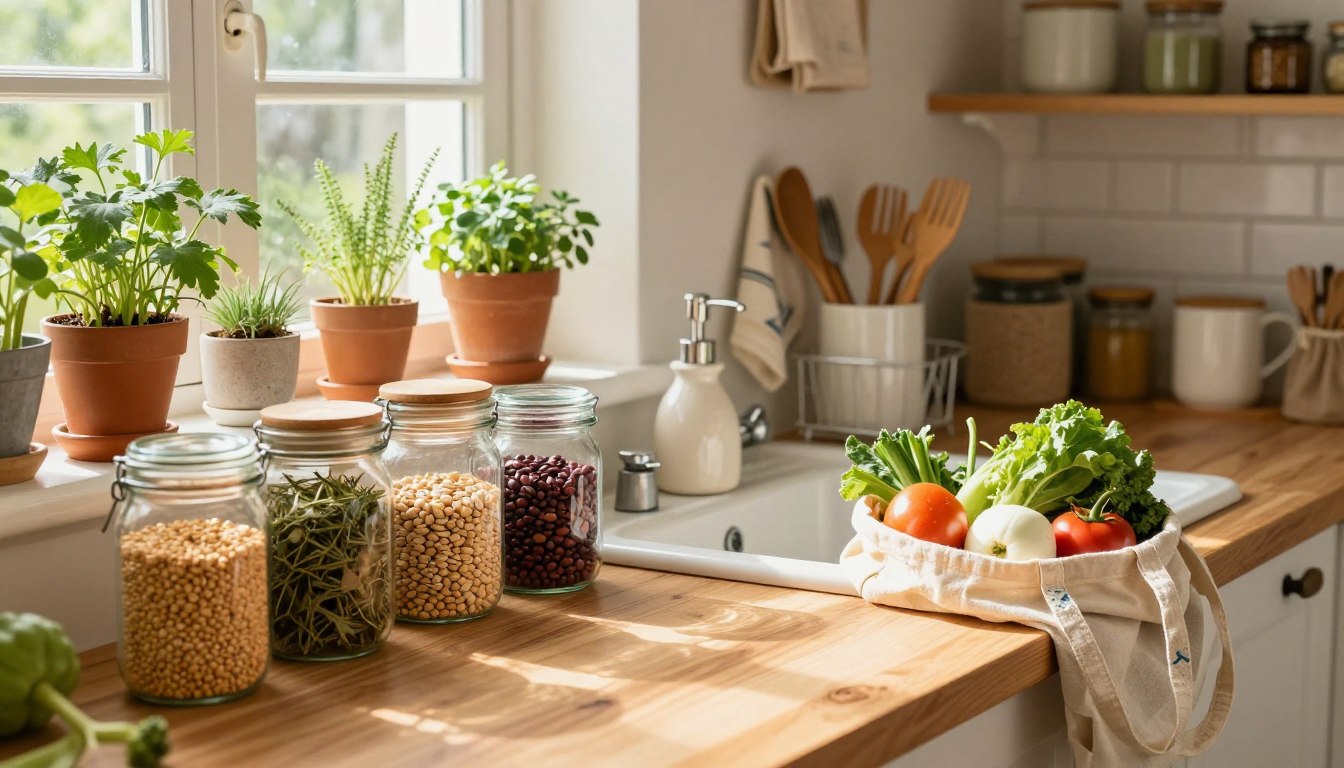
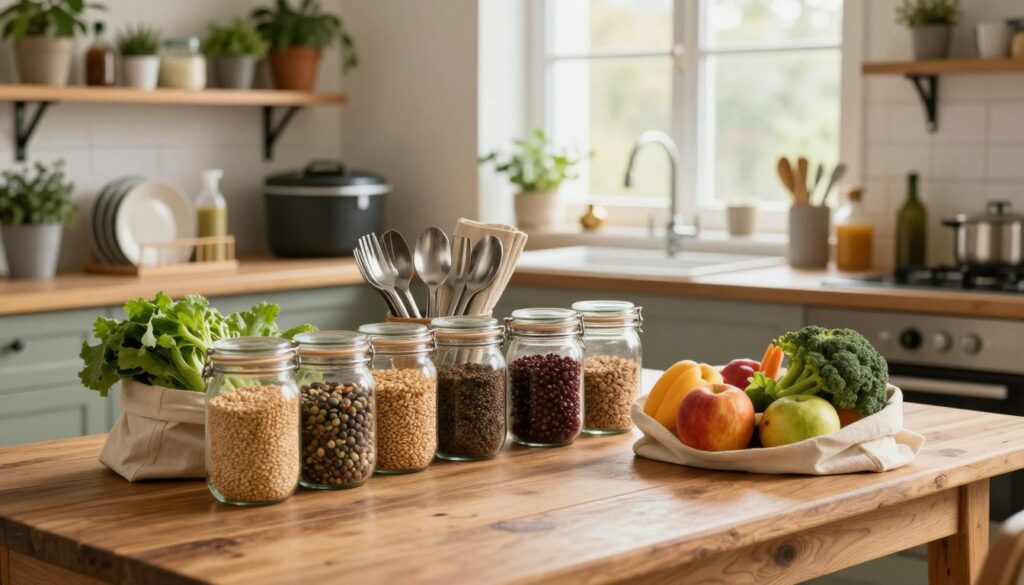
Using glass jars is another great idea. You can use pasta sauce or pickle jars for storing grains, leftovers, or snacks. This switch helps keep plastic out of landfills and keeps your pantry tidy.
Utilizing Items You Already Own
Many people buy expensive “eco-friendly” products they don’t really need. Before buying, check what you already have. You probably have containers, bowls, and cloths that can be used in many ways.
Efficiency is key when saving money. Using what you have reduces waste and cuts down on carbon emissions. The most sustainable item is the one you already own.
Setting Up a Simple Composting System
Food scraps are a big part of household waste, but they don’t have to go to landfills. A basic composting system is a crucial sustainable kitchen practice. Even in small apartments, you can manage organic waste well.
Start with a small bin on your countertop for vegetable peels, coffee grounds, and fruit scraps. If you have outdoor space, a simple pile or bin works great. If not, look for local programs that accept food waste for composting.
| Item | Disposable Cost | Reusable Cost | Savings Potential |
|---|---|---|---|
| Paper Towels | $15/month | $0 (Old Rags) | High |
| Plastic Wrap | $5/month | $0 (Glass Lids) | Medium |
| Food Storage Bags | $8/month | $0 (Glass Jars) | High |
Smart Shopping Habits for Sustainable Living
Learning to shop smart is key to a budget-friendly zero waste lifestyle. Changing how you shop can greatly reduce waste and save money. These sustainable kitchen practices help you control waste before it starts.
Buying in Bulk to Reduce Packaging
Using bulk bins for items like grains and spices is a big waste reducer. Bring your own containers or bags to avoid plastic. This method saves money and prevents food waste.
“The greatest threat to our planet is the belief that someone else will save it.”
Choosing Seasonal and Local Produce
Buying seasonal and local produce is key to cost-effective sustainable living. It cuts down on carbon emissions and saves money. Plus, local produce tastes better and is cheaper than imports.
| Shopping Habit | Waste Impact | Cost Benefit |
|---|---|---|
| Bulk Bins | Low | High |
| Local Farmers Market | Minimal | Medium |
| Pre-packaged Goods | High | Low |
Avoiding Impulse Purchases and Over-Packaging
Good green kitchen budgeting starts with meal planning. Shopping with a list helps avoid impulse buys and plastic waste. Mindful shopping keeps your kitchen organized and efficient.
Creative Ways to Repurpose and Preserve Food
Changing how you handle food is key to a greener home. By using every bit of an ingredient, you follow sustainable kitchen practices. These practices save money and help the planet. Making small changes daily can make a big difference over time.
Mastering Food Storage Techniques
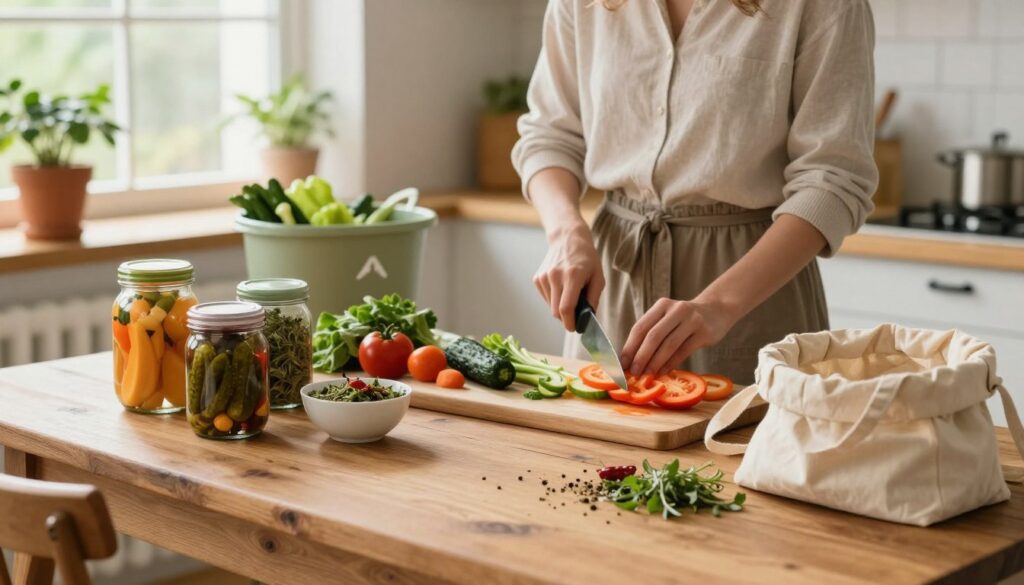
Keeping food fresh starts with proper storage. Many throw away food because it was stored wrong. Knowing what your produce needs can stop it from spoiling too soon.
For instance, store leafy greens in a container with a paper towel to keep them dry. Root vegetables should go in a cool, dark spot, away from fruits that give off ethylene gas. These tips help your food stay fresh and tasty longer.
“The greatest threat to our planet is the belief that someone else will save it.”
Turning Scraps into Stocks and Broths
Looking at scraps as ingredients is a great low waste kitchen idea. Vegetable peels, onion ends, and herb stems make delicious homemade stocks. This way, you reduce waste and save money and nutrients.
Just keep a freezer bag for your scraps. When it’s full, make a flavorful stock for soups or risaws. It turns waste into a valuable kitchen resource.
Implementing a First-In-First-Out Inventory System
A first-in-first-out (FIFO) system is key for green kitchen budgeting. It means putting new items at the back and using older ones first. This way, you use up what you have before it goes bad.
- Check your pantry before buying more.
- Group similar items to see what you have.
- Use clear containers to track what you have.
This system helps avoid buying things you already have. It keeps your kitchen efficient and helps you stick to your budget.
Eco-Friendly Kitchen Tips for Long-Term Savings
You can make your kitchen more efficient by adopting eco-friendly habits. These habits help you save money and reduce waste. They make your home both sustainable and cost-effective.
Making Your Own Natural Cleaning Solutions
Many cleaners come in plastic bottles that waste space and money. You can make budget-friendly zero waste solutions with items like white vinegar, baking soda, and lemon juice.
These ingredients clean without harsh chemicals. It’s safer for your family and saves money on expensive cleaners.
Investing in Durable Kitchenware
Choosing durable items saves money in the long run. A good cast iron skillet or stainless steel pot lasts for decades.
Don’t buy cheap, non-stick pans that break quickly. Investing in durable kitchenware means less waste and fewer replacements.
Reducing Energy Consumption While Cooking
Small changes in cooking can save a lot on bills. Using lids on pots cooks food faster and uses less energy.
Using toaster ovens or pressure cookers for small meals is also smart. These eco-friendly kitchen tips help you live sustainably and save energy.
| Item Category | Disposable Option | Durable Alternative | Long-Term Benefit |
|---|---|---|---|
| Cleaning Supplies | Plastic Spray Bottles | Glass Refillable Bottles | Reduced Plastic Waste |
| Cookware | Cheap Non-Stick Pans | Cast Iron or Stainless Steel | Lifetime Durability |
| Food Storage | Plastic Wrap | Beeswax Wraps or Glass | Lower Monthly Costs |
Conclusion
Starting your journey to a zero waste kitchen saves money and helps the planet. You’ve begun living more consciously by trying these low waste kitchen ideas. Every little change helps the environment a lot.
You don’t have to be perfect to make a difference at home. What’s important is being consistent. These eco-friendly tips help you make small changes that add up.
Choosing glass jars or using old containers makes a big difference over time. Your efforts protect our planet for the future. Keep trying new things that work for you and your budget.
Tell your friends and family about your progress. Your commitment to a low waste kitchen inspires others. Keep up with these eco-friendly tips to keep your home healthy and green for years.