
Living in a world built on convenience can make avoiding trash hard. You might feel overwhelmed by the plastic in your daily life. But, starting a zero waste challenge 30 days can help change your habits.
According to the EPA’s waste and recycling data, small everyday changes at home add up to significant environmental impact.
Our current world makes a completely clean life hard. But, adopting a circular mindset can reduce your environmental impact. It’s not about being perfect; it’s about making better choices every time you shop or eat. Progress is far more important than perfection on this journey.
Your zero waste journey starts with small, intentional steps. These steps build momentum over time. By making simple swaps, you can live sustainably with confidence. This guide will help you transform your home and reduce your impact on the planet.
Key Takeaways
- Focus on consistent progress rather than achieving immediate perfection.
- Adopt a circular mindset to minimize your daily environmental footprint.
- Use this structured framework to build lasting habits with ease.
- Understand that small, intentional swaps lead to significant long-term results.
- Navigate modern disposable culture by making conscious, informed consumer choices.
Preparing for Your Zero Waste Challenge 30 Days
Starting your environmental journey is more than just stopping plastic purchases. Organizing your approach makes your zero waste challenge 30 days rewarding, not stressful. A solid foundation helps you smoothly transition to a more eco-friendly lifestyle.
Assessing Your Current Waste Habits
First, understand your current waste impact. Observe what you throw away most, like food packaging or plastic bottles. This audit shows you where to improve your eco-friendly habits without feeling overwhelmed.
Just observe your trash bin for a week. You’ll see patterns that show where your waste comes from. This insight is the first step to real change.
Setting Realistic Goals for Your Household
A zero waste lifestyle is about progress, not perfection. Set goals that fit your household’s needs and schedule. Start with one area, like the kitchen, before expanding.
Small, consistent wins build confidence for long-term success. Every item you avoid throwing away is a win for the planet.
Gathering Essential Reusable Supplies
Having the right tools makes your transition easier. You don’t need to buy everything new. Focus on items that replace single-use disposables in your daily life.
| Disposable Item | Sustainable Alternative | Primary Benefit |
|---|---|---|
| Plastic Water Bottle | Stainless Steel Flask | Reduces plastic waste |
| Paper Napkins | Cloth Napkins | Washable and reusable |
| Plastic Grocery Bags | Canvas Tote Bags | Durable and long-lasting |
| Disposable Razors | Safety Razor | Less metal/plastic waste |
Preparing your home with these essentials helps you avoid old habits. Preparation is truly the key to staying committed on your journey.
Week One: Tackling the Kitchen and Food Waste
Reducing food waste and pantry clutter is a great start to living waste-free. The kitchen is a big source of trash. It’s a perfect place to begin your sustainable living challenge.
Eliminating Single-Use Plastics in the Pantry
Begin by checking your pantry for plastic-wrapped items. Switch to glass jars or stainless steel for your dry goods. This keeps them fresh and easy to see.
This change helps you avoid buying things you already have. Organization is key for reducing waste.
Mastering Composting Basics at Home
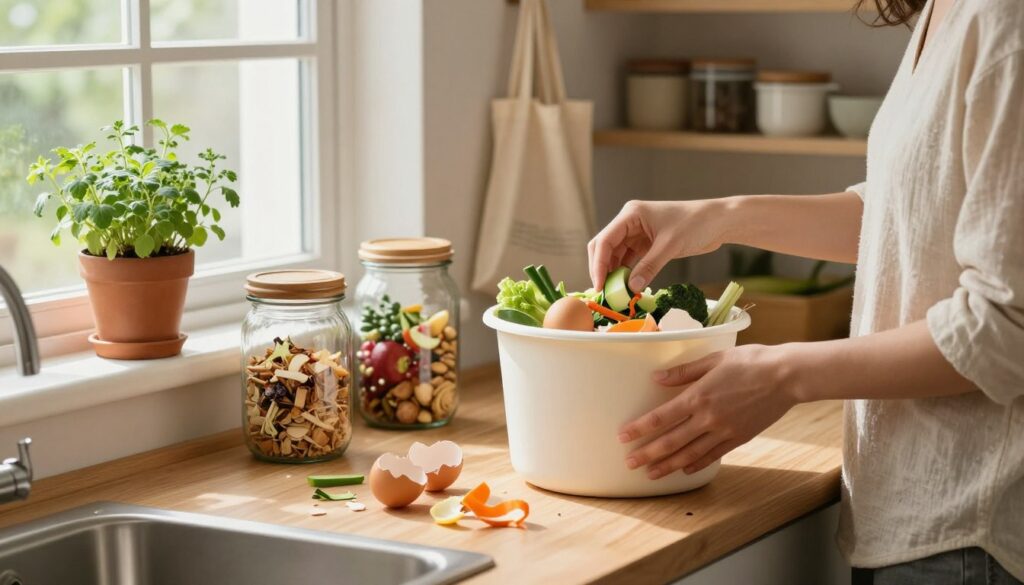
Don’t throw food scraps in the trash. They can turn into rich soil. Use vegetable peels and coffee grounds for compost.
“The greatest threat to our planet is the belief that someone else will save it.” — Robert Swan
You can compost even in a small space. Use a countertop bin or worm farm. Composting is a big reduce waste tip.
Smart Grocery Shopping Strategies
Plan your meals before shopping. This stops impulse buys that often go to waste. Shopping with a list helps you buy only what you need.
Choosing Bulk Bins Over Pre-Packaged Goods
Use cloth bags or glass containers for bulk shopping. This cuts down on plastic packaging. It also saves money on items like grains and spices.
Storing Produce to Extend Freshness
Proper storage keeps fruits and veggies fresh longer. Store leafy greens in a damp cloth. Root veggies go in a cool, dark spot to prevent spoilage.
By following these reduce waste tips, you’re on the path to a greener lifestyle. Every small change helps towards a more mindful, waste-free living.
Week Two: Transforming Your Bathroom and Personal Care
Week two is all about changing your daily hygiene for a cleaner home. Focus on your bathroom to adopt eco-friendly habits that reduce waste. This area often has the most single-use plastic, making it a great place to start.
Swapping Disposable Toiletries for Sustainable Alternatives
First, check your toiletries for items that go to waste. Replace plastic toothbrushes with bamboo ones and solid soap bars for bottled liquid. These changes help keep plastic out of our oceans.
Creating Your Own Natural Cleaning Solutions
Many bathroom cleaners come in heavy plastic with harsh chemicals. You can make your own using white vinegar, baking soda, and essential oils. Use a reusable glass bottle to save money and keep your space clean.
| Product Type | Traditional Item | Sustainable Alternative |
|---|---|---|
| Dental Care | Plastic Toothbrush | Bamboo Toothbrush |
| Hair Care | Bottled Shampoo | Solid Shampoo Bar |
| Cleaning | Chemical Spray | Vinegar & Water |
Reducing Water Consumption in Daily Routines
Water conservation is key to a sustainable lifestyle. Small changes can make a big difference over time.
Installing Low-Flow Showerheads
Switching to a low-flow showerhead is a big step. These showerheads save water without losing pressure. It’s a simple change that saves water and energy.
Practicing Mindful Water Usage
Your daily habits also matter for water conservation. Turn off the faucet while brushing your teeth or shaving. Being mindful of water use shows your commitment to eco-friendly habits.
Week Three: Rethinking Consumption and Wardrobe Choices
Changing how you see fashion is a big step towards waste-free living. The fashion world pollutes a lot, but you can make a difference. By choosing to reuse, you help create a world that values keeping things over buying new.
Adopting a Minimalist Approach to Fashion
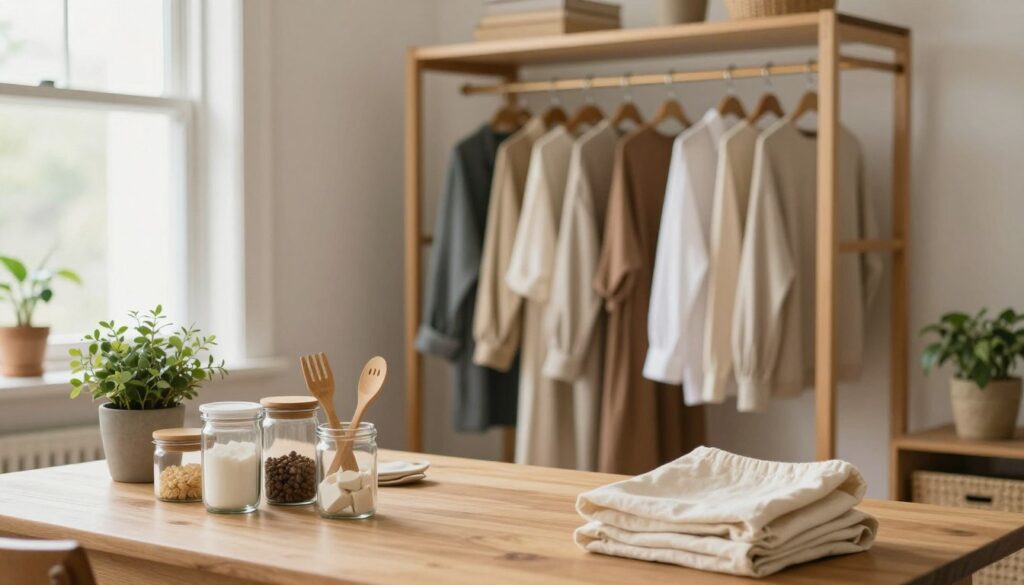
A minimalist wardrobe means focusing on quality over quantity. Start by sorting through your closet to find your favorites. Creating a capsule wardrobe makes your mornings easier and helps you avoid buying too much.
With fewer clothes, you think more about what you buy. Look for pieces that can be worn in many ways. This way, you enjoy what you have more and don’t follow every trend.
Repairing and Upcycling Existing Items
Think twice before throwing away a broken item. Learning simple sewing can make your clothes last longer. These small actions are key to living waste-free.
If something can’t be fixed, find a new use for it. Old shirts can become cleaning rags, and old jeans can make cool accessories. This way, you turn waste into something useful.
Navigating Second-Hand Shopping Effectively
Buying second-hand is a great way to care for the planet and find unique clothes. It keeps clothes out of landfills and reduces the need for new, resource-heavy clothes. It’s a way to build a wardrobe that shows your values.
Finding Quality Pieces at Thrift Stores
When thrift shopping, be patient. Look for clothes made from natural fibers like cotton, wool, or linen. These last longer and feel better. Always check the seams and zippers before buying.
Hosting Clothing Swaps with Friends
Hosting a clothing swap is a fun way to update your style without spending money. Invite friends to swap clothes they no longer want. It’s a way to help the environment and strengthen friendships while giving clothes a second life.
Week Four: Long-Term Habits for a Sustainable Lifestyle
Reaching the end of your journey marks the start of a sustainable living path. You’ve shown that small changes can make a big difference. Now, it’s time to make sure these habits last.
Advocating for Environmental Awareness in Your Community
Your influence goes beyond your home. By sharing your story, you can inspire others to live greener. Start by hosting a small gathering to talk about easy changes.
Think about joining or starting a local group focused on conservation. When you push for environmental awareness, you help your community grow stronger. Your voice can make a big difference.
Supporting Local Businesses and Farmers Markets
Shopping locally is a key part of a zero waste lifestyle. Choose farmers markets for fresh produce without plastic. This helps your local economy and cuts down on carbon emissions.
Look for stores with bulk bins or refill stations. Supporting these businesses encourages more to go green. Building relationships with local vendors means you get fresh, sustainable food all year.
Refining Your Waste-Free Living Practices
Sustainability is a journey, not a finish line. Clean out your digital space to save energy. This is a small but important step in your zero waste lifestyle.
Check your progress often to find ways to reduce your impact. Consistency is key to success in environmental awareness. By improving your daily habits, you keep your commitment to sustainable living strong for years.
Conclusion
Your 30-day journey is just the start of making a big difference. Every small change you made has a big impact on your waste.
You now have the tools to keep going on your zero waste journey. Keep the habits that work for you and let go of the ones that don’t. This challenge is about making progress, not being perfect.
It’s not about getting rid of all waste. You’ve created a strong base for a greener future for your family and community.
Share your journey with friends to inspire them. Your commitment to these habits makes eco-friendly choices seem normal. Keep moving forward, one step at a time.
Starting a zero waste challenge for 30 days is a big step against our throwaway culture. It might seem hard because of our current systems, but changing our mindset can make a big difference. This journey is about making progress, not being perfect right away.
By choosing to start this challenge, you’re setting yourself up for a more mindful life. We’re here to guide you, giving you the tools to make a real change.
Preparing for Your Zero Waste Challenge 30 Days
Getting ready is key to your success. First, take stock of your current habits. Look at what you usually throw away, like takeout containers or plastic mailers. This helps you set goals that fit your home.
### Assessing Your Current Waste Habits
Understanding your waste is crucial. Spend a few days observing your trash. See if it’s food scraps or packaging from online orders. Knowing what you throw away helps you tackle the biggest problems first.
### Setting Realistic Goals for Your Household
Your zero waste journey should be personal. If you live with many people, focus on buying in bulk. But if you’re alone, cutting down on single-use items might be your goal. Setting achievable goals keeps you motivated.
### Gathering Essential Reusable Supplies
Before you start, gather what you need. You might already have glass jars or tote bags. For new items, look for quality brands like Stasher or Hydro Flask. This ensures your eco-friendly habits last.
Week One: Tackling the Kitchen and Food Waste
The kitchen is a big source of waste, making it a great place to start. Changing how you shop and handle leftovers can make a big difference.
### Eliminating Single-Use Plastics in the Pantry
Look at your pantry staples. Choose bulk options and use your own containers. Brands like Bob’s Red Mill offer paper bags, helping you keep your kitchen green.
### Mastering Composting Basics at Home
Give food scraps a new life as soil. Use a backyard bin or a countertop composter like Lomi. Composting cuts down on methane emissions and is key to reducing waste.
### Smart Grocery Shopping Strategies
Start with smart shopping. Plan meals and use reusable bags. Shopping at local places like Sprouts can help you find bulk items and support a circular food system.
Week Two: Transforming Your Bathroom and Personal Care
This week, focus on your bathroom. It’s filled with plastics and chemicals, but it’s easy to make changes.
### Swapping Disposable Toiletries for Sustainable Alternatives
Small changes can make a big difference. Switch to bamboo toothbrushes or solid shampoo bars. These changes cut down on plastic waste.
### Creating Your Own Natural Cleaning Solutions
You don’t need harsh chemicals for a clean home. Make your own cleaners with baking soda and vinegar. Dr. Bronner’s Castile Soap is great for multi-purpose cleaning, saving money and plastic.
### Reducing Water Consumption in Daily Routines
Water conservation is part of sustainable living. Use low-flow showerheads or turn off the tap while brushing. These actions show your commitment to a waste-free life.
Week Three: Rethinking Consumption and Wardrobe Choices
This week, focus on the fashion industry’s impact. Adopting a minimalist wardrobe helps reduce waste and supports sustainable fashion.
### Adopting a Minimalist Approach to Fashion
The best outfit is one you already own. Build a capsule wardrobe with versatile pieces. When buying new, choose brands like Patagonia that value durability and fair labor.
### Repairing and Upcycling Existing Items
Fixing clothes instead of throwing them away is key. Upcycle old items into new ones. This mindset is crucial for a zero waste lifestyle.
### Navigating Second-Hand Shopping Effectively
For new clothes, shop second-hand. Use apps like Poshmark or ThredUp. Hosting a clothing swap with friends is another way to promote sustainable fashion.
Week Four: Long-Term Habits for a Sustainable Lifestyle
In the final week, focus on making your new habits last. This ensures your commitment to sustainability continues beyond the challenge.
### Advocating for Environmental Awareness in Your Community
Your actions can inspire change. Encourage local businesses to use reusable cups or start a community garden. Sharing your journey can motivate others to join the movement.
### Supporting Local Businesses and Farmers Markets
Support businesses that share your values. Shopping at local farmers markets reduces carbon emissions and supports waste-free living.
### Refining Your Waste-Free Living Practices
Look at your digital waste too. Declutter your inbox and unsubscribe from junk mail. These final steps ensure your sustainable living journey is complete and lasting.
FAQ
### Q: Is it really possible to achieve a 100% waste-free lifestyle during a 30-day challenge?
A: While “zero waste” sounds absolute, the goal is progress, not perfection. Our systems are often linear, but brands like TerraCycle help bridge the gap. By adopting a circular mindset, you can significantly reduce waste, even if you don’t achieve “absolute zero” right away.
### Q: What are the must-have supplies to start my sustainable living journey?
A: Start with basics like Stasher bags, a Klean Kanteen water bottle, and glass jars for bulk shopping. Preparation is key, so audit your trash before buying new “eco” items. This ensures your goals are realistic for your household.
### Q: How can I manage food waste if I live in a small apartment without a backyard?
A: You can still live sustainably in small spaces! Use a countertop composter like Lomi or a Vitamix FoodCycler to turn scraps into soil. Many urban dwellers also use services like ShareWaste to find local gardens for composting, boosting environmental awareness.
### Q: Are DIY cleaning solutions effective for a zero waste lifestyle?
A: Absolutely! DIY cleaners with baking soda and vinegar eliminate plastic packaging and toxic chemicals. These hacks are cost-effective and safer for your home. Dr. Bronner’s Sal Suds is a versatile soap for multi-surface cleaning.
### Q: How does a minimalist wardrobe contribute to a sustainable living challenge?
A: The fashion industry is a major polluter, so focusing on quality over quantity is vital. Instead of buying new, try apps like Poshmark or ThredUp for second-hand finds. Brands like Patagonia offer repair programs through Worn Wear to help extend your clothes’ life, a key part of environmental awareness.
### Q: What happens after my zero waste challenge 30 days is over?
A: The end of the month is just the start of your sustainable living journey. By now, you’ve developed habits to keep a zero waste lifestyle. Continue refining your practices by advocating for change at local markets or joining community groups to expand your impact.