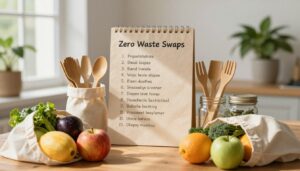
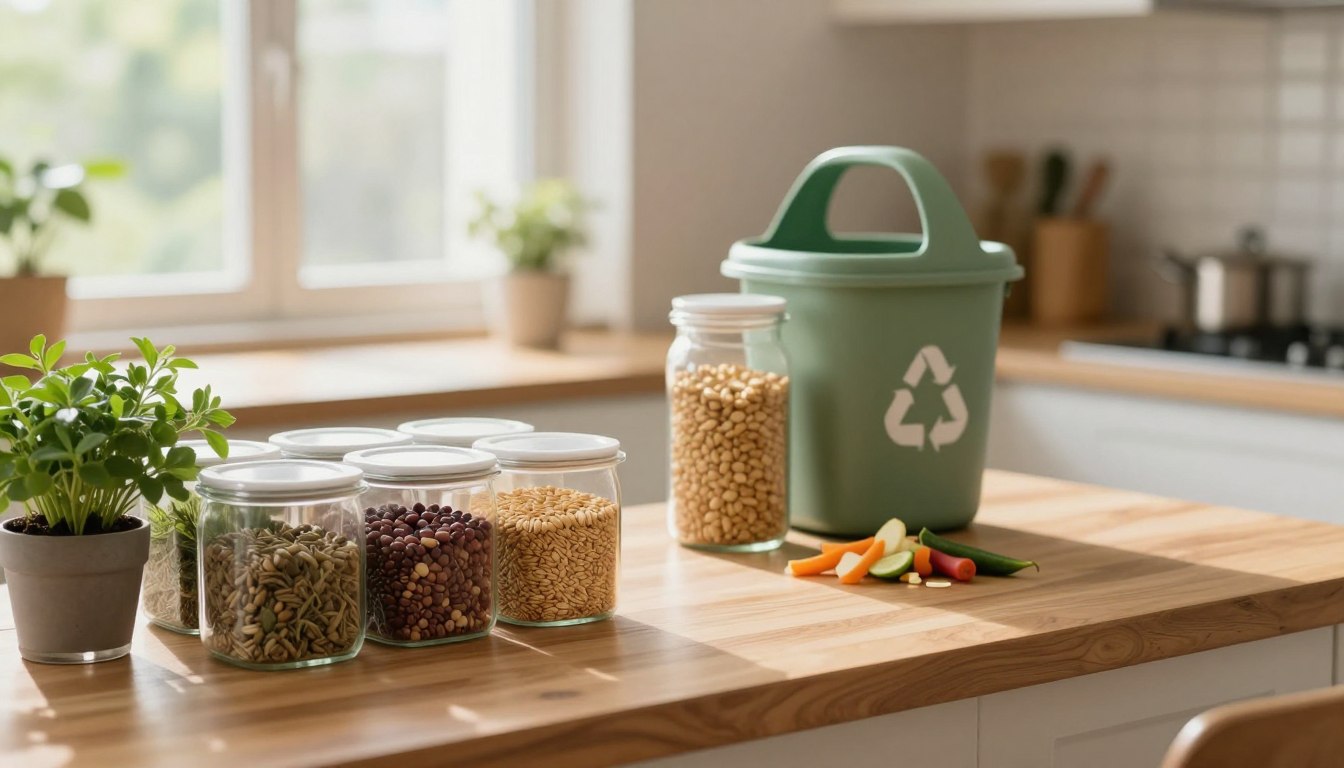

Getting started with what is zero waste living is easier than you think, and this guide walks you through every step without the overwhelm. Ever looked at your trash bin and felt uneasy? You’re not alone in wanting to save our planet. A zero waste lifestyle is a way to live cleaner and more intentionally.
According to the EPA’s waste and recycling data, small everyday changes at home add up to significant environmental impact.
This philosophy centers on the 5Rs: Refuse, Reduce, Reuse, Recycle, and Rot. By making small, thoughtful choices daily, you can greatly reduce your impact on the environment.
Learning about what is zero waste living lets you change your ways. It’s not about being perfect, but about making progress and choosing wisely. Let’s dive into how you can start this journey to a greener future today.
Key Takeaways
- The 5Rs framework provides a clear roadmap for reducing your daily trash.
- Small, consistent changes in your habits lead to significant long-term environmental benefits.
- Mindful consumption helps you prioritize quality over quantity in your home.
- Composting organic scraps is a vital step in diverting materials from landfills.
- Embracing this journey is about progress, not achieving immediate perfection.
Understanding Zero Waste Living
Zero waste isn’t about getting to zero trash. It’s not about fitting all your trash into a small jar. What is zero waste living really about? It’s about moving from a linear economy to a circular one. This means keeping resources in use for as long as possible.
The Concept of Zero Waste
The zero waste movement started as an industrial idea, not just for individuals. In our old linear system, we use raw materials, make products, and then throw them away. A circular economy aims to design waste out from the start.
Seeing waste as a design problem changes how we think about buying things. It makes us choose items that last, can be fixed, and recycled. It’s about making choices that help materials be valued, not wasted.
| Feature | Linear Economy | Circular Economy |
|---|---|---|
| Resource Use | Extract and discard | Reduce and reuse |
| Product Life | Short-term utility | Long-term durability |
| Waste Output | High volume | Minimal to none |
Benefits of Going Zero Waste
Living a zero waste lifestyle has big benefits for you and the planet. By using fewer single-use items, you cut down on waste and carbon emissions. It also saves you money by focusing on quality over quantity.
Going zero waste makes your life simpler and more fulfilling. It reduces stress by clearing out clutter. Living this way means your actions help create a better future for all.
The Impact of Waste on Our Planet
Every item you throw away adds to a big problem that affects our whole planet. The huge amount of trash we make puts a lot of pressure on our natural resources. By choosing eco-friendly living, you can lessen the harm from our “take-make-waste” way of life.
Environmental Consequences
Waste that’s not managed well harms both land and sea. Plastics in our oceans break down into tiny pieces that hurt sea creatures and get into our food. Food scraps in landfills make methane, a gas that makes the Earth warmer.
It’s key to focus on environmental sustainability to save our planet’s biodiversity. By making less waste, you need fewer raw materials. This helps keep forests, clean water, and homes for animals.
Economic Implications
Waste costs more than just what you pay for products. Many families spend a lot on things that get thrown away quickly. This endless buying and throwing away is a big financial burden.
Our current way of dealing with waste is not only bad for the planet but also expensive. Cities spend billions on waste management, which comes from taxes. Switching to a circular model can save money for both families and cities.
| Waste Factor | Linear Model Impact | Circular Model Benefit |
|---|---|---|
| Resource Use | High extraction rates | Reduced raw material need |
| Disposal Costs | Expensive landfill fees | Lower waste management costs |
| Environmental Toll | High carbon emissions | Lowered climate impact |
| Household Budget | Constant replacement costs | Long-term savings |
Key Principles of Zero Waste
Starting sustainable living practices means changing how you see items for your home. The 5Rs framework helps you simplify daily habits and reduce your environmental impact.
“The greatest threat to our planet is the belief that someone else will save it.”
Refuse
Stopping waste starts with not letting it into your life. Say no to freebies, single-use plastics, and junk mail you don’t need. This stops waste before it starts.
Reduce
After refusing, work on reducing what you buy. Look at what you already have and think if you really need more. Choosing quality over quantity helps keep your home simple and supports sustainable living practices.
Reuse
Think of ways to give items a new life before throwing them away. Use glass jars for food or old clothes for cleaning. Reusing what you have is key to a low-waste lifestyle.
Recycle
Recycling should be a last resort, not your first choice. It’s part of managing waste but not perfect for all materials. Only put items in the bin that can’t be reused, and check local guidelines to avoid mistakes.
Steps to Begin Your Zero Waste Journey
Starting a journey toward waste-free living is not hard. Break it down into smaller steps. This way, you can move to a greener lifestyle without feeling rushed.
Assess Your Current Waste
Begin by doing a trash audit. Watch what you throw away for a week before it goes to the curb.
See what you toss most often, like food waste, plastic, or paper. This shows where you can make the biggest change.
Set Realistic Goals
After seeing your waste, set achievable goals. Make them specific, measurable, and with a deadline. Don’t try to change everything at once.
Start with small steps, like using reusable bags instead of plastic ones. Small, consistent changes are better than big, short-lived ones.
Create a Plan
Make a plan to help you stay on track. List your goals and decide where to start.
Having a plan helps you avoid trying too much at once. Remember, waste-free living is about your own pace and what you can do.
Essential Tips for Reducing Waste at Home
Start by checking your daily habits and products. Look at what you throw away to find hidden trash. This step helps you live more sustainably and save money over time.
Kitchen Strategies
The kitchen is a big source of trash, but it’s easy to change. Use reusable cloth napkins or rags instead of paper towels. Also, switch to bamboo cutlery or stainless steel straws for your meals.
Bathroom Adjustments
Make your morning routine greener by using refillable soap dispensers. This cuts down on plastic waste. Bamboo toothbrushes and solid shampoo bars also reduce landfill waste.
Living Room Changes
Make your living room more sustainable by choosing durable furniture. This way, you avoid buying cheap items that break fast. Reducing clutter makes your home peaceful and keeps plastic waste away.
Changing your habits takes time, but it’s worth it. Small, consistent steps make reducing waste at home a part of your life. These tips help your family and the planet stay healthy.
Zero Waste in the Kitchen
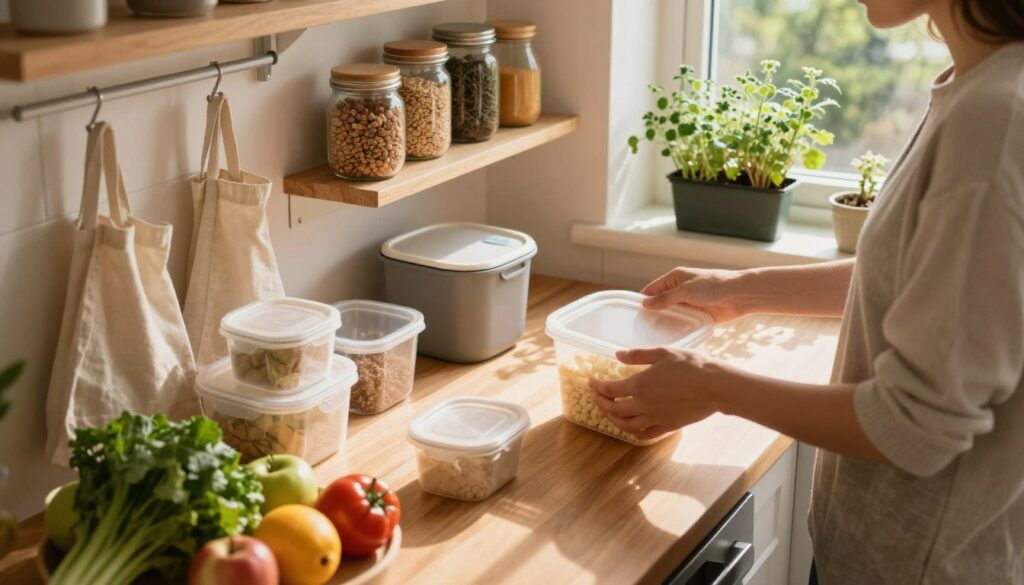
Turning your kitchen into a green space is a great way to start reducing waste at home. This room is where most trash comes from. Making small changes here can make a big difference for the planet. By changing how you deal with food waste and packaging, you can make your kitchen more eco-friendly.
Composting Basics
Composting is a great way to keep organic waste out of landfills. Instead of throwing away food scraps and coffee grounds, you can turn them into nutrient-rich soil for your garden. This process is like nature’s way of recycling, turning waste into something valuable.
To start, you just need a small bin or a spot in your backyard. Many cities offer composting programs if you don’t have space. Consistency is key to make this habit stick, so food waste doesn’t rot in plastic bags.
“The greatest threat to our planet is the belief that someone else will save it.”
Bulk Shopping Benefits
Changing how you shop for groceries is another key step in reducing waste at home. Buying in bulk lets you get just what you need without plastic packaging. Using your own jars or bags keeps trash out of your kitchen.
Buying in bulk can also save you money. You avoid the costs of packaging and branding. It also helps you keep your pantry organized. These habits make your kitchen cleaner and support a healthier planet.
Sustainable Alternatives to Everyday Products
Living eco-friendly is simpler when you replace common items. Choose durable goods that last long. This stops the endless cycle of buying and throwing away.
Eco-Friendly Personal Care
Your bathroom is a big source of plastic waste. But, it’s also a great place to start changing. Many products come in plastic bottles that end up in landfills. You can switch to sustainable alternatives that work just as well.
- Shampoo and conditioner bars: These bars get rid of plastic bottles.
- Safety razors: A good metal razor lasts forever, unlike plastic ones.
- Bamboo toothbrushes: These are compostable and a natural choice over plastic handles.
- Reusable cotton rounds: These fabric pads replace many disposable cotton balls over time.
Sustainable Fashion Choices
The fashion world adds a lot to global waste. But, you can make a difference by choosing wisely. Focus on quality over quantity in your wardrobe. Build a collection of clothes that last, not just follow trends.
Here are ways to make your closet more eco-friendly:
- Thrifting and secondhand shopping: Give old clothes a new life and keep them out of landfills.
- Repair and mend: Learn to sew to fix small issues instead of throwing clothes away.
- Choose natural fibers: Pick organic cotton, linen, or wool. They’re durable and better for the planet than synthetic fabrics.
Investing in high-quality pieces means buying less and supporting fair production. Every time you choose to repair or buy secondhand, you help the planet.
Building a Zero Waste Community
Your personal journey toward sustainability is important, but the real power comes from working together. Connecting with others amplifies your efforts and makes environmental sustainability a normal part of life. A supportive network keeps you motivated and helps share valuable resources.
Connecting with Like-Minded Individuals
Find inspiration by connecting with those who share your commitment to the zero waste movement. There are many ways to build your circle, whether online or in person:
- Join local social media groups dedicated to sustainable living to exchange tips.
- Attend neighborhood meetups or potlucks where you can discuss challenges and successes.
- Start a small book club focused on environmental literature to foster deeper conversations.
Sharing your experiences makes others feel less alone in their efforts. By swapping tips on bulk goods or mending clothes, you make a low-waste lifestyle more accessible and enjoyable for all.
Participating in Local Initiatives
Going beyond personal habits can influence your community. Getting involved in local projects is a powerful way to advocate for environmental sustainability and create lasting change.
Consider these activities to boost the zero waste movement:
- Organize community swap events to keep items out of landfills and in the hands of those who need them.
- Host workshops that teach practical skills like composting, food preservation, or DIY cleaning products.
- Participate in letter-writing campaigns to encourage local businesses and officials to adopt greener policies.
These collective actions show that a waste-free future is a shared community value. Working together creates a ripple effect that encourages others to rethink their consumption habits.
Challenges You Might Encounter
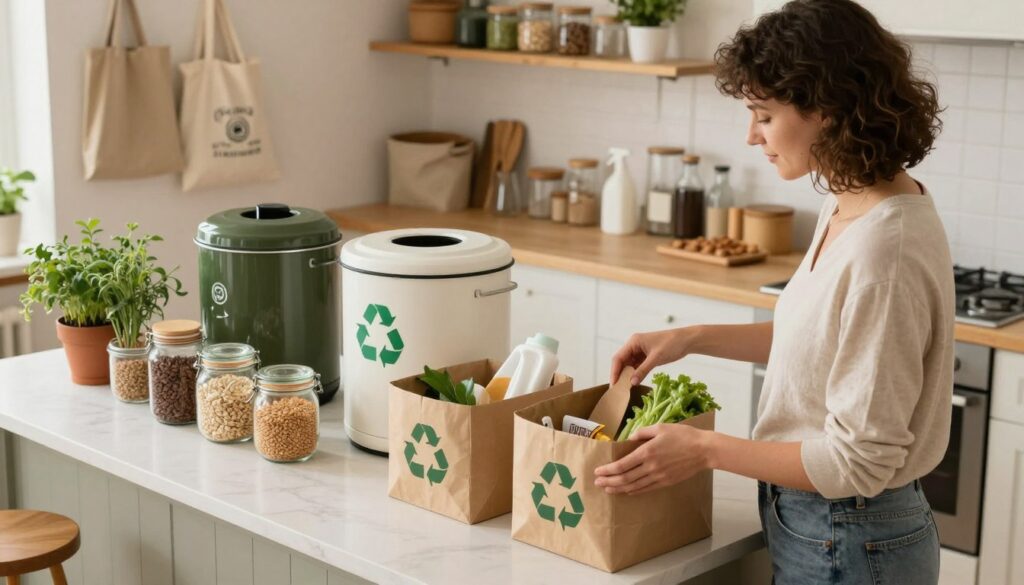
Starting a journey to waste-free living can be tough. You might face big challenges that test your will. Remember, these obstacles are often beyond your control.
Common Obstacles
Living in an area that doesn’t support low-waste living is common. You might not have access to fresh, package-free food or bulk stores. This makes single-use plastics seem like the only option.
The zero waste movement often talks about expensive, sustainable products. Money and time can limit your choices. Know that you’re doing your best with what you have.
Overcoming Perfectionism
Many start with the goal of producing no trash at all. But, this can lead to burnout. Instead, aim for consistent progress.
Small, sustainable steps are more effective than trying to be perfect. Even if you buy something with plastic, keep going. The goal is to lessen your impact over time, not to be perfect right away.
| Common Barrier | Systemic Reality | Realistic Strategy |
|---|---|---|
| Lack of bulk stores | Limited local infrastructure | Buy in largest sizes available |
| Food deserts | Restricted access to fresh food | Prioritize local farmers markets |
| Single-use convenience | High-speed modern lifestyle | Carry reusable kits daily |
| High cost of goods | Premium pricing for eco-items | Focus on reusing what you own |
Educational Resources for Zero Waste Living
Exploring new views on sustainability can help you live a greener life. Learning more about your choices can show you the big picture. This knowledge helps you tackle tough issues like environmental justice and making things accessible for all.
Books and Documentaries
Books and films offer deep insights into the zero waste movement. Look for content that talks about intersectional issues. This includes how racism affects the environment and making sure everyone can join in.
These resources give you zero waste tips that are more than just recycling. They make you think differently about stuff and waste. Watching documentaries can show you how your choices affect the world.
Online Communities
Connecting with others who care about zero waste is key. Online forums and social media groups are great for sharing tips and advice. They’re full of zero waste tips that really work.
Being part of these groups makes you feel supported. You can find tips on buying in bulk or learn about global issues. Use the table below to find the best way to learn for you.
| Resource Type | Primary Benefit | Best For |
|---|---|---|
| Books | In-depth analysis | Understanding systemic issues |
| Documentaries | Visual storytelling | Emotional connection |
| Online Forums | Peer support | Daily practical advice |
Keeping Your Zero Waste Momentum
Staying committed to a waste-free lifestyle is a long-term journey. It requires ongoing focus on sustainable living practices. Seeing it as a marathon, not a sprint, helps you avoid burnout and stay motivated.
Tracking Progress and Celebrating Achievements
Keeping track of your journey is key. Use a spreadsheet or journal to record your waste reduction efforts. Seeing your progress in writing shows the positive impact you’re making.
Don’t forget to celebrate your small wins. Whether it’s avoiding single-use plastics for a month or mastering composting, these achievements are worth celebrating. Recognizing your efforts boosts your commitment to sustainable living practices and keeps you motivated.
Adapting and Evolving Your Practices
Life changes, and so should your waste reduction methods. As your situation or access to resources changes, you may need to adjust your habits. Being adaptable is essential for long-term success.
If a method no longer works for you, don’t get discouraged. Look for new ways to incorporate sustainable living practices that fit your current life. Staying flexible ensures your efforts remain effective and rewarding for years.
Conclusion: Embrace a Zero Waste Lifestyle
Choosing a zero waste lifestyle is a big step for our planet’s health. Every choice you make helps create a cleaner, greener future for all.
Changing the world needs everyone’s help, but your actions are key. By reducing waste, you encourage others to think differently about what they buy. Companies like Patagonia and Package Free Shop prove that businesses can also make a difference.
Being consistent is your best ally on this journey. You don’t have to be flawless to make a big impact. Just keep making small changes that work for you and push for a circular economy in your area.
Living with purpose makes your daily life clearer and more meaningful. A zero waste lifestyle does more than clean up your home. It also means you’re helping to save natural resources for the future. Begin your journey now and see how your efforts change your world.