

These zero waste save money at home steps make sustainable living simple and budget-friendly — here’s exactly how to get started. Did you know the United States threw away 292.4 million tons of trash in 2018? Each person adds about 4.9 pounds of waste every day. You can make a big difference in your own way.
Living mindfully can cut down your household costs and help the planet. Small changes can make a big difference. You don’t have to change everything at once to see results.
This guide will show you how to make these changes easily. You’ll learn to use resources wisely without spending more. Let’s see how small actions can make a big impact for your future.
Key Takeaways
- Understand the environmental impact of daily consumption habits.
- Learn how reducing trash leads to lower monthly expenses.
- Discover simple, actionable steps for a more sustainable lifestyle.
- Transform your living environment into a model of efficiency.
- Gain confidence in making mindful choices without feeling overwhelmed.
The Philosophy of Frugal Zero Waste Living
Living a frugal zero waste lifestyle is more than just cutting down on trash. It’s a big change in how you see your home’s resources. It started as a way to design products without waste, but now it helps with money too. By changing your mind, you can make your home last longer, not just throw things away.
Understanding the Connection Between Waste and Spending
Our economy is set up to make you keep buying and throwing things away. Every disposable item you buy means you’re paying to make trash. This constant cycle of consumption wastes your money and keeps you spending on things you don’t need.
“The greatest threat to our planet is the belief that someone else will save it.”
Seeing waste as a big problem, not just your fault, gives you power. Choosing sustainable living means picking items that last, so you don’t have to buy new things all the time. Here’s how changing your view can save you money.
| Habit Type | Linear Approach | Circular Approach |
|---|---|---|
| Shopping | Single-use items | Reusable alternatives |
| Maintenance | Replace when broken | Repair and restore |
| Budgeting | High recurring costs | One-time investment |
Setting Realistic Goals for Your Household
Many feel too overwhelmed by zero waste living. But, you don’t have to be perfect. Just making small changes can make a big difference. Focus on one area of your home at a time.
Begin with the area where you throw away the most. Set achievable milestones to keep your journey fun. Every little step helps make your home more sustainable for your family.
Kitchen Strategies to Reduce Waste and Expenses
Did you know the average US family throws away over $640 worth of food each year? This money goes to waste, but you can stop it. By learning to reduce waste at home, you save money and help the environment.
Meal Planning to Eliminate Food Spoilage
Planning your meals before shopping is key to saving money. Knowing what you need helps you avoid buying too much. This way, every ingredient has a purpose.
Here are some easy steps to help you:
- Check your pantry and fridge before shopping to see what you already have.
- Create a weekly menu based on items that need to be used up first.
- Write a strict shopping list and stick to it to avoid impulse buys.
Creative Ways to Use Food Scraps
Many things we throw away can be useful. Using budget-friendly zero waste ideas helps you make the most of your food.
Turning Vegetable Peels into Broth
Don’t throw away onion skins, carrot peels, and celery ends. Keep them in a freezer bag. When it’s full, make a tasty vegetable broth. This saves you money on store-bought broth.
Composting Basics for Beginners
If you can’t use something, compost it. You don’t need a big backyard to compost. Indoor bins work well for small spaces. Composting turns waste into soil for your plants or garden.
Switching to Reusable Storage Solutions
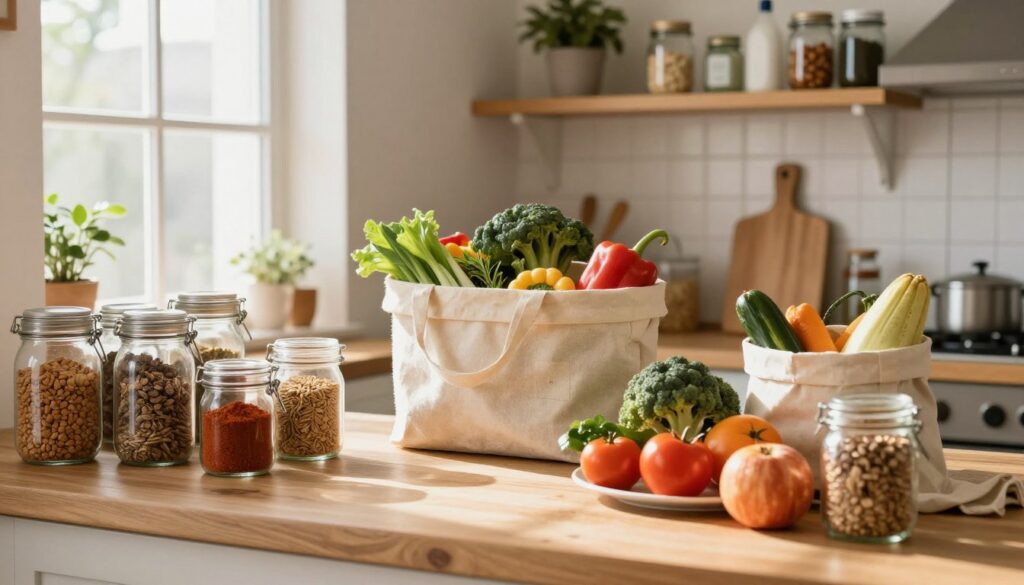
Plastics like cling film and sandwich bags cost a lot over time. Durable, reusable items are a smart choice. Glass jars, silicone bags, and beeswax wraps are great for keeping food fresh.
These budget-friendly zero waste ideas might cost a bit at first, but they save money in the long run. Choosing quality over convenience makes your kitchen sustainable for years.
Bathroom and Personal Care Cost-Cutting Hacks
Turning your bathroom into a waste-free living space can save you money. By changing your habits, you avoid expensive, chemical products in too much plastic. These eco-friendly home tips are good for the planet and your wallet.
Making Your Own Cleaning Supplies
You don’t need fancy cleaners to keep your bathroom clean. White vinegar and baking soda work great against soap scum and grime. Mix them with water to make a strong, safe cleaner for just a few cents.
By making your own cleaners, you skip single-use plastic bottles. Use a glass you already have to store your cleaner. This is key to waste-free living and saves you money on chemical products.
Transitioning to Solid Toiletries
Switching to solid shampoo and conditioner bars saves money and the planet. They last longer because they have no water. One bar can replace three plastic bottles of shampoo.
Solid toiletries are also light and easy to travel with. They help keep your space tidy and support a green lifestyle. Adopting these eco-friendly home tips simplifies your life and reduces waste.
Reducing Disposable Paper Product Usage
The bathroom is a big source of waste at home. Women use 10,000 tampons and plastic applicators in their lifetime. Using reusable menstrual cups or cloth pads can save you a lot of money.
Replace disposable cotton rounds with washable pads or use reusable microfiber cloths instead of paper towels. These changes can save you a lot of money over time. Here’s a table showing how much you can save with these changes.
| Product Category | Disposable Cost (Annual) | Reusable Cost (Annual) | Potential Savings |
|---|---|---|---|
| Menstrual Care | $120 | $10 | $110 |
| Cleaning Sprays | $60 | $5 | $55 |
| Cotton Rounds | $40 | $5 | $35 |
| Shampoo/Conditioner | $150 | $60 | $90 |
How to Zero Waste Save Money at Home Through Smart Shopping
Using a mindful shopping strategy is a great way to zero waste save money at home. It stops waste from entering your home. This way, every dollar you spend has a purpose and helps the planet.
Buying in Bulk to Avoid Packaging Costs
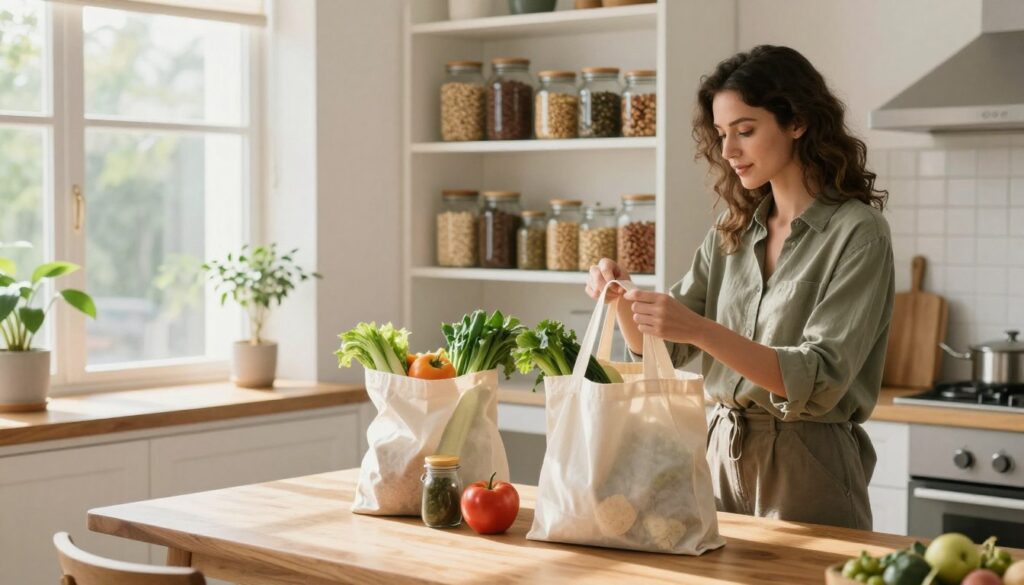
Buying staples in bulk is a smart budget-friendly zero waste idea. It saves you money by avoiding packaging costs. This move helps reduce plastic waste, like the 60 million plastic bottles that end up in landfills daily.
Carrying your own glass jars or cloth bags to the store also helps. Buying in bulk is often cheaper than single-use items. Consistency is key in making these changes, so start with what you use most.
Prioritizing Secondhand Purchases
Buying used items is a smart way to save money and reduce waste. Thrift stores and online marketplaces have great deals on quality items. Embracing the pre-loved market keeps items from being thrown away too soon.
Secondhand shopping reduces the need for new products and shipping. It’s a key part of sustainable living without giving up style or comfort. Many items in resale shops last longer than new ones.
Evaluating Needs Versus Wants Before Buying
Controlling impulse spending is crucial for zero waste saving at home. Before buying, ask if you really need it. This helps avoid clutter and saves money.
Adopting these budget-friendly zero waste ideas changes your mindset. It leads to a more organized and sustainable home. Every purchase supports the world you want to live in.
Extending the Life of Your Household Items
Fixing things instead of throwing them away saves money and helps the planet. This approach is key to a sustainable lifestyle. It lets you use what you already have, cutting down on waste and saving cash.
Basic Repair Skills for Clothing and Textiles
You don’t need to be a pro to mend clothes. Simple tasks like sewing buttons or fixing holes can make clothes last longer. These small actions help you avoid buying new clothes and live more sustainably.
“The most sustainable garment is the one already in your closet.”
Maintaining Appliances to Prevent Replacement
Appliances are big investments that need care. Regular cleaning and maintenance can prevent expensive repairs. Keeping them in good shape means they’ll work better for longer.
For small problems, check the manual or search online before calling a repair service. Often, a simple fix or clean can solve the issue. This smart approach helps your home run smoothly and sustainably.
Repurposing Old Containers for Organization
Don’t throw away items that still have life. Plastic bottles and glass jars can become useful storage containers. They’re great for holding pantry items or craft supplies.
Being creative with storage can:
- Turn old shoeboxes into drawer dividers.
- Use empty tins for pens, brushes, or kitchen tools.
- Repurpose plastic tubs for small hardware or garden tools.
Repurposing items is a fun way to reduce waste at home and make your space unique. Every reuse helps you live more mindfully and sustainably.
Conclusion
Starting a zero waste lifestyle is a big step towards caring for our planet. It’s good for your wallet and the Earth.
By looking into these eco-friendly tips, you’ve already begun your journey. Simple actions like composting or using reusable items make a big difference.
Start with what feels easy for you and your family. It’s better to be consistent than perfect in building new habits.
By choosing sustainable options, you help save the planet’s resources. Tell your friends and family about your progress to encourage them too.
Every time you fix or reuse something, you help reduce landfill waste. Your daily choices can make a huge difference in creating a cleaner world.