
In 2018, the United States EPA found that the country made 292.4 million tons of trash. This shows we need to change how we live. Starting a zero waste lifestyle for beginners is a great way to help the planet.
Starting to live sustainably might seem hard, but it’s not. This beginner’s guide to zero waste shows you how to take it one step at a time. Making a few simple changes can make a big difference in your home.
Starting a zero waste living journey is about making progress, not being perfect. Every choice you make helps the planet. Let’s look at how you can start this journey today.
Key Takeaways
- Understand the massive scale of municipal trash in the United States.
- Learn that sustainability is a journey of small, consistent steps.
- Discover practical ways to reduce your daily environmental impact.
- Focus on progress rather than achieving immediate perfection.
- Gain confidence in making eco-friendly choices at home.
Understanding the Philosophy of Zero Waste
Starting how to start zero waste living is not about being perfect. It’s about changing how you see the things you buy. Seeing waste as a design problem, not a given, helps you adopt sustainable living tips that match your values. This change lets you take back control of what you consume.
Defining the Zero Waste Movement
The movement is based on the 5Rs hierarchy. These rules guide you to reduce your environmental impact by stopping waste before it starts.
- Refuse: Say no to things you don’t need, like freebies or single-use plastics.
- Reduce: Cut down on what you own and only buy what’s really needed.
- Reuse: Pick durable, long-lasting items instead of disposable ones.
- Recycle: Recycle only after you’ve used up all other options.
- Rot: Compost organic waste to give back to the earth.
The table below shows how these steps help save resources in your daily life:
| Action | Priority Level | Primary Goal |
|---|---|---|
| Refuse & Reduce | Highest | Prevent waste generation |
| Reuse | Medium | Extend product lifespan |
| Recycle & Rot | Lowest | Manage unavoidable waste |
Why Your Individual Impact Matters
You might think your choices don’t count in the big picture. But, they do. Your actions help change the world, influencing industries and laws. By choosing sustainable living tips, you show there’s a demand for green products.
Every time you say no to a plastic straw or compost, you’re part of a bigger movement. Learning how to start zero waste living makes you a mindful shopper. Your efforts inspire others, showing that living lightly is achievable and fulfilling.
Assessing Your Current Waste Habits
Did you know the average American throws away 4.9 pounds of waste every day? This number shows why it’s crucial to look at your waste. Before you can reduce waste at home, you need to know what you’re throwing away.
By watching your daily habits, you can make big changes. This isn’t about feeling bad, but about finding ways to live greener. It’s about building eco-friendly habits that work for you.
Conducting a Home Waste Audit
A home waste audit is a simple way to track your trash for a week. Just keep a notepad by your bin and write down everything you throw away. You might be shocked at how fast small things add up.
Sort your waste into types like food, paper, plastic, and recyclables. Seeing your waste in groups helps you know where to start. With your data, you can reduce waste at home by tackling the biggest areas first.
Identifying Your Biggest Waste Culprits
Most homes find a few items make up most of their trash. Common offenders are single-use plastic bottles, food packaging, and organic waste that could be composted. Knowing these items helps you make big changes.
Creating eco-friendly habits is easier when you know what to change. Use the table below to organize your findings and plan for a cleaner home.
| Waste Category | Common Culprit | Reduction Strategy |
|---|---|---|
| Food Waste | Vegetable scraps | Start a compost bin |
| Plastic | Single-use bottles | Use a reusable flask |
| Paper | Junk mail | Opt for digital billing |
| Packaging | Plastic wrap | Use beeswax wraps |
The Zero Waste Lifestyle for Beginners: Kitchen Swaps
Making simple zero waste swaps in your kitchen can greatly reduce daily trash. The kitchen is a great place to start because you see results quickly. This helps you build confidence to adopt a zero waste lifestyle for beginners in your whole home.
Replacing Single-Use Plastics with Reusables
Kitchens often have disposable items like plastic bags and paper towels. You can switch to durable, long-lasting items that save money. Investing in high-quality reusables significantly cuts down household waste.
Begin by checking your drawers for items you use once and then throw away. Swap plastic containers for stainless steel or glass ones that last for years. These simple zero waste swaps reduce landfill waste and keep your food storage organized.
Storing Food Without Plastic Wrap
Plastic wrap is a big waste contributor, but it’s easy to replace. Many people find they prefer not using it once they stop. Natural materials can keep leftovers fresh, benefiting your health and the planet.
Using Glass Jars and Beeswax Wraps
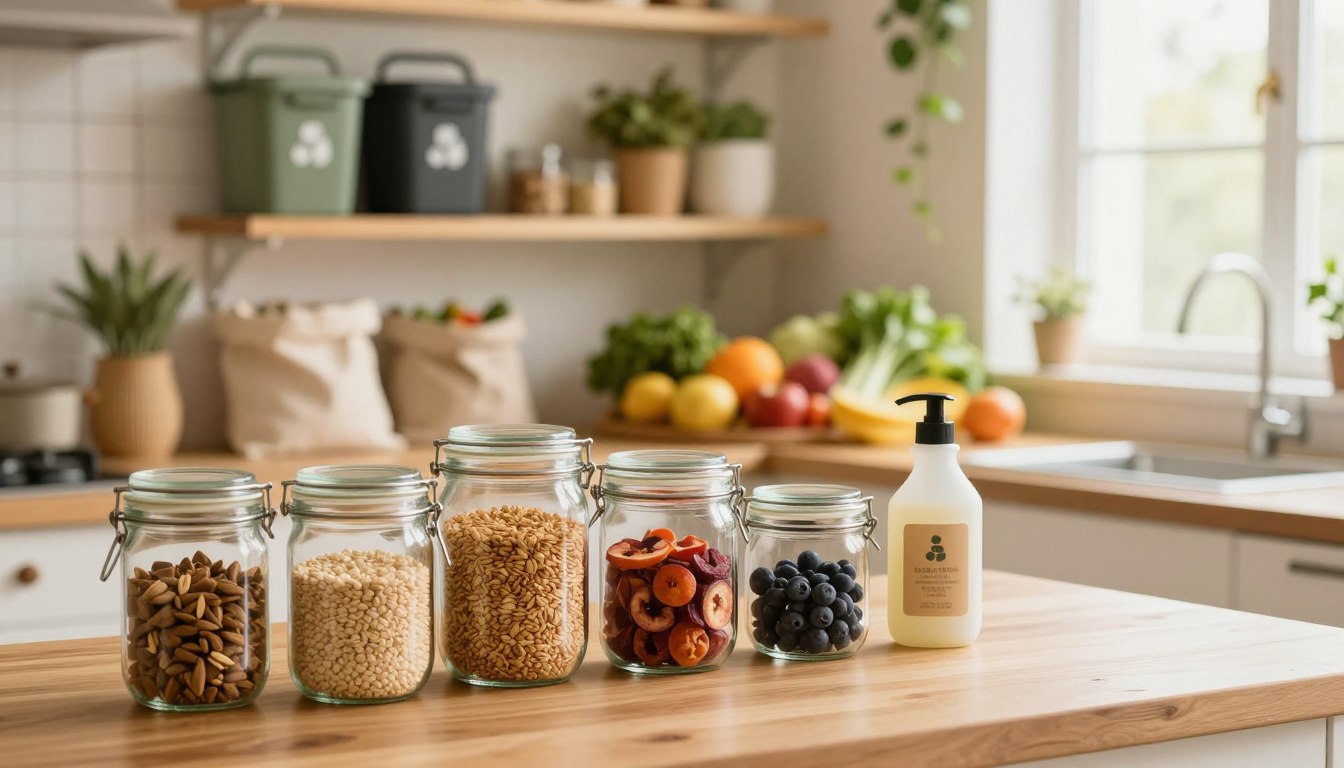
Glass jars are great for storing pantry items, leftovers, and fresh produce. They are completely reusable, easy to clean, and non-toxic, making them essential for eco-friendly kitchens. You can even reuse jars from pasta sauce or pickles to save resources.
Beeswax wraps are perfect for covering bowls or wrapping half-cut fruits. This zero waste lifestyle for beginners item is made from beeswax, cloth, oil, and pine resin. They are naturally antibacterial and breathable, keeping food fresh longer than plastic.
Reducing Waste in Your Bathroom Routine
Changing your daily hygiene routine to be eco-friendly is simpler than you might think. Many products come in plastic that harms our oceans and landfills. By picking simple zero waste swaps, you can greatly reduce your impact on the environment while keeping your personal care standards high.
Switching to Solid Toiletries
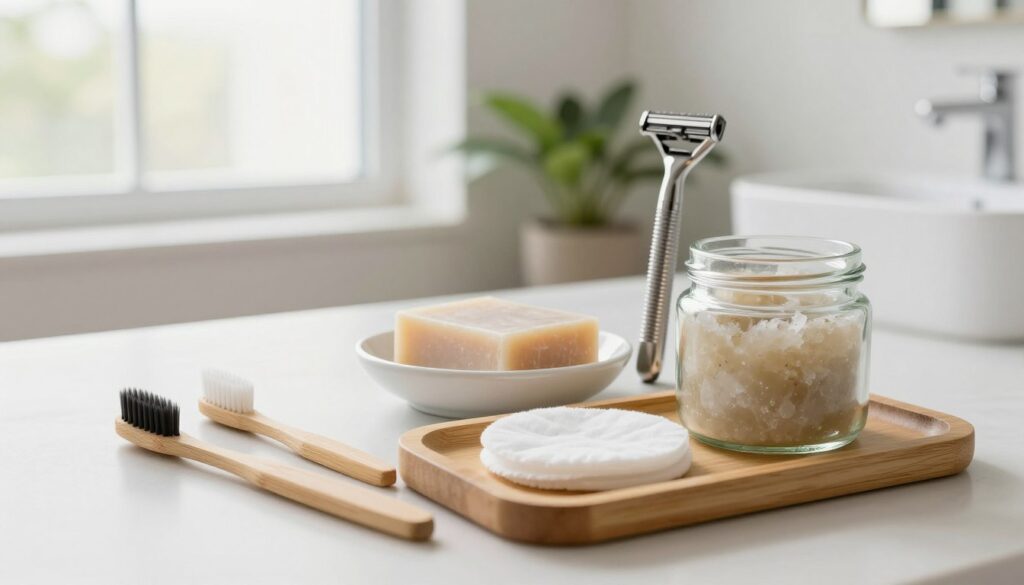
One key way to reduce waste is to ditch liquid soaps and shampoos in plastic bottles. Solid toiletries like shampoo bars and body soap blocks are concentrated and come in minimal, recyclable packaging.
These products last longer than liquids, saving you money. Making the switch is a rewarding step toward a cleaner home and a healthier planet.
Choosing Sustainable Dental Care Products
Your dental routine is another area for easy waste reduction. Most toothbrushes are made from non-recyclable materials, adding to millions of pounds of waste each year. Switching to sustainable options is a simple and impactful change.
Bamboo Toothbrushes and Refillable Floss
Bamboo toothbrushes have biodegradable handles that can be composted after removing the nylon bristles. Using silk or corn-based floss in a refillable glass container also helps avoid plastic floss containers.
“The greatest threat to our planet is the belief that someone else will save it.”
Don’t forget the impact of your period products. The average woman uses about 10,000 tampons and plastic applicators in her lifetime. Choosing a menstrual cup or reusable cloth pads is a significant simple zero waste swap to reduce waste.
- Use shampoo bars to eliminate plastic bottles.
- Switch to bamboo toothbrushes for a compostable handle.
- Choose refillable dental floss to avoid plastic waste.
- Consider reusable menstrual products to save thousands of items from the landfill.
Sustainable Shopping Habits for Grocery Runs
Starting your journey to sustainable living can begin in your local supermarket. Making small changes in your food purchases can greatly reduce your household’s trash each week.
Bringing Your Own Bags and Containers
Start by keeping reusable bags in your car or by your door. Always remember to use them when you go shopping. This way, you avoid plastic or paper bags that end up in landfills.
Use glass jars or cloth bags for fruits and veggies. These swaps help avoid the thin plastic rolls in the produce section. Reducing single-use plastic is a big win for our planet.
Shopping in Bulk Sections
Many stores now have bulk bins for items like rice, beans, nuts, and spices. Scooping these into your own containers is a key part of sustainable living. It cuts down on unnecessary packaging.
Buying in bulk also saves money and reduces food waste. You only buy what you need for a recipe. This means no leftover ingredients taking up space in your pantry for months.
Supporting Local Farmers Markets
Shopping at local farmers markets is another great way to lower your environmental impact. Buying food grown nearby cuts down on carbon emissions from shipping and refrigeration.
Plus, farmers markets often have produce without the heavy plastic wrapping. Embracing sustainable living means connecting with your community and supporting local growers who care about the land.
| Shopping Method | Waste Level | Cost Efficiency |
|---|---|---|
| Traditional Supermarket | High | Variable |
| Bulk Bin Shopping | Very Low | High |
| Local Farmers Market | Minimal | High |
Managing Waste and Composting at Home
Turning kitchen scraps into garden fertilizer is simpler than you think. By managing your organic waste, you adopt eco-friendly habits that help the planet. Landfills are big methane gas producers, which is bad for the environment. By not throwing away food scraps, you help reduce this problem.
Starting a Simple Compost Bin
You don’t need a big backyard to start composting. Many people reduce waste at home with a small bin or tumbler. Pick a spot that’s easy to get to, with a mix of “greens” like veggie peels and “browns” like dried leaves.
Layer your materials to help air flow. Consistency is key when starting. Keep it moist but not wet to help it decompose well.
Understanding What Can Be Composted
It’s important to know what goes into your compost bin. Choose organic materials that break down fast and safely. Here are some good items:
- Fruit and vegetable scraps
- Coffee grounds and paper filters
- Crushed eggshells
- Dry leaves, twigs, and grass clippings
- Plain, non-glossy cardboard or newspaper
Don’t add meat, dairy, or oily foods. They attract pests and smell bad. Stick to plant-based scraps for good compost.
Reducing Food Waste Through Meal Planning
The best way to manage waste is to prevent it. Plan your meals to avoid buying too much. This saves money and helps the environment. It makes your kitchen more efficient.
Check your pantry before shopping to avoid buying too much. Meal planning means every ingredient has a use. This small change greatly reduces kitchen waste.
Mindful Consumption and Decluttering
Making eco-conscious choices often starts with saying no to things you don’t need. This shift can turn your space into a place of purpose, not just storage. It’s the start of living sustainably.
Adopting the Refuse and Reduce Mindset
The most sustainable item is what you already have or what you choose not to buy. A refuse and reduce mindset helps you avoid buying things that clutter your space. Before buying, ask if it’s really needed or just a quick fix.
Try waiting 48 hours before buying something non-essential. If you still want it, see if you can get it without buying new. This habit leads to more eco-conscious choices that save money and help the planet.
Donating and Repurposing Unwanted Items
Don’t just throw away items when decluttering. Look for ways to give them a new life through donation or creative reuse. Many items can become treasures for others.
Buying second-hand is great for the environment. It saves money and supports a circular economy. Here are some benefits:
- Cost Savings: Save 20% to 85% on purchases.
- Resource Conservation: Reduce demand for new products.
- Waste Reduction: Keep useful items out of landfills.
| Shopping Method | Cost Impact | Environmental Benefit |
|---|---|---|
| Buying New | High | Low |
| Second-hand | Low (20-85% off) | High |
| Repurposing | Minimal | Very High |
By choosing these eco-conscious choices, you help the environment. Decluttering is a journey, not a race. Take your time to decide the best way to reuse your items.
Sustainable Fashion and Clothing Choices
Creating a conscious wardrobe is key to sustainable living for beginners. Focus on quality over fast fashion to lessen your environmental footprint. Start by valuing what you already own.

Building a Capsule Wardrobe
A capsule wardrobe has a few, versatile items you love. It stops impulse buys and keeps your closet tidy. With fewer items, you spend less time choosing what to wear.
- Select neutral colors that mix and match easily.
- Prioritize high-quality fabrics like organic cotton or linen.
- Focus on timeless silhouettes that do not go out of style.
Shopping Secondhand and Thrift Stores
Shopping secondhand is a great start to sustainable living for beginners. It keeps clothes out of landfills and saves resources. Buying used clothes saves energy and water needed for new production.
Thrift stores and online resale platforms offer unique, quality items. This supports a circular economy. Every secondhand purchase is a victory for the planet.
Caring for Your Clothes to Extend Their Life
Proper care makes your clothes last longer. Simple habits prevent early disposal and keep favorites looking new. Treating clothes with care respects the resources used to make them.
Here are tips to make your clothes last:
- Wash clothes in cold water to keep fibers intact.
- Air dry clothes to avoid heat damage.
- Learn basic sewing to fix small issues.
These habits are crucial for sustainable living for beginners. Taking care of your clothes moves you away from disposable culture. It leads to a more sustainable future.
Eco-Friendly Cleaning Solutions for Your Home
You can make your cleaning routine greener with a few easy steps. You don’t need harsh chemicals or lots of plastic to keep your home clean.
Changing your cleaning habits improves your indoor air and helps the planet. Small changes in your cleaning supplies can make a big difference.
Making DIY All-Purpose Cleaners
DIY cleaning is practical and affordable. It helps you avoid single-use plastic bottles. You probably have most of the ingredients in your pantry already.
White vinegar, water, and a bit of essential oil clean most surfaces well. Baking soda is great for scrubbing without scratching.
These homemade cleaners are safe for your family and pets. They save you money and keep your home clean.
Choosing Concentrated Refillable Products
For convenience, choose concentrated, refillable cleaners. These let you reuse the same bottle over and over.
Concentrates cut down on shipping weight and emissions. They save water. Many brands offer dissolvable tablets or glass refill vials to reduce plastic waste.
Choosing these options supports a circular economy. It’s a simple way to keep your home clean and fight plastic pollution.
Navigating Social Situations and Travel
Exploring the world outside your home needs some extra planning to keep your eco-friendly goals. It’s easy to manage waste at home, but it gets tougher when you’re traveling or at social events. Staying true to your values doesn’t mean giving up on social life or travel.
Packing a Zero Waste Travel Kit
Being prepared is key when you’re away from home. A portable kit helps you avoid single-use plastics at airports, hotels, or restaurants. Consistency is key to making these habits stick during your adventures.
Your kit should be light and easy to carry. Include a stainless steel or glass water bottle for refilling at fountains. Also, pack bamboo or metal utensils, a cloth napkin, and reusable produce bags for snacks or souvenirs.
| Item | Purpose | Benefit |
|---|---|---|
| Reusable Bottle | Hydration | Eliminates plastic bottle waste |
| Utensil Set | Dining | Replaces disposable plastic cutlery |
| Cloth Bag | Shopping | Avoids single-use plastic bags |
| Cloth Napkin | Hygiene | Reduces paper waste |
Communicating Your Values Without Pressure
Social situations can be tricky when your lifestyle is different from those around you. You might feel awkward saying no to a plastic straw or bringing your own container. The best approach is to lead by example rather than through criticism.
When out with friends or family, mention your preference in a friendly way. Saying, “I’m trying to cut back on plastic, so I brought my own cup,” can spark curiosity without conflict. Kindness and patience help others understand your perspective.
You’re not responsible for others’ choices. Focus on your actions and stay positive. This is the most effective way to inspire change in your social circle. By staying relaxed and prepared, you can enjoy your time with others while honoring your commitment to the planet.
Overcoming Common Challenges and Staying Motivated
Starting a sustainable journey can be tough. You might face unexpected obstacles. Remember, Rome wasn’t built in a day. Your commitment to the planet is a long-term effort, not a quick fix.
Dealing with Perfectionism and Eco-Anxiety
Many feel overwhelmed by the need to be perfectly green right away. This can lead to burnout. Instead, aim for consistent, manageable changes that fit your life.
If you use a plastic straw or forget your reusable bag, don’t be too hard on yourself. Perfectionism hinders progress in any beginner’s guide to zero waste. Learn from mistakes and keep moving forward.
Celebrating Small Wins Along the Way
Every choice you make helps the environment. Celebrate small victories, like composting for the first time or using your coffee mug all week. Celebrating these small victories boosts your motivation and reinforces new habits.
Tracking your progress can be a great motivator. Keep a journal or share your journey with friends. Focus on what you’ve achieved to keep your beginner’s guide to zero waste positive and sustainable.
Conclusion
Reducing waste is a journey of making choices that make a big difference. Every small change helps the planet.
Start by adding these sustainable living tips to your daily life. Changing how you shop or manage your home can lead to big environmental changes.
You don’t have to be perfect to help the planet. Being consistent is key to making a lasting impact.
Keep learning and exploring new ways to reduce your impact. Growing your habits can help you align with brands like Patagonia or Seventh Generation.
Your efforts towards sustainability help create a better future for all. Share your progress with friends or family to inspire them.
What change will you make in your home this week? Let your actions show your commitment to a sustainable lifestyle.